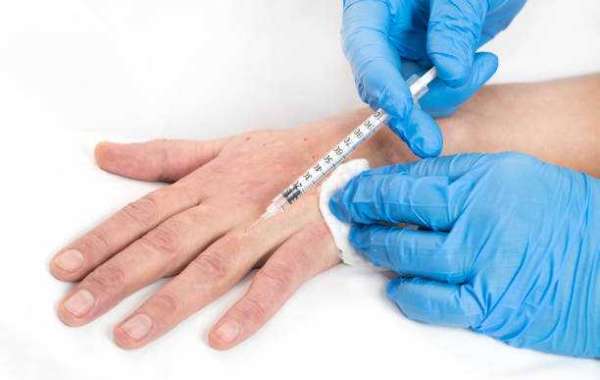

Aqualyx Injections in Dubai may be considered for selected patients who have localized fat along the flanks that affects the transition between the waist and hips. The goal is targeted contour refinement, not overall weight loss.
The flank area can be deceptively difficult to assess because its appearance changes with posture, clothing, body proportions, and the distribution of surrounding abdominal and back tissue. A careful evaluation can help determine whether a localized fat pocket is actually responsible for the contour concern.
Understanding the Flank Area
The flanks are the lateral portions of the torso between the lower ribs and the hips.
This region plays an important role in the appearance of the waist. Even a relatively modest amount of localized fullness can make the waist appear less defined from the front, side, or rear.
However, flank shape is not determined by fat alone. Rib structure, pelvic width, muscle development, skin elasticity, and the distribution of abdominal and back tissue all influence the silhouette.
This is why treating a visible fullness without assessing the surrounding anatomy may not produce the expected contour.
What Creates a Fuller Flank Appearance
Several factors can contribute to fullness around the side of the waist.
Localized superficial fat
A soft, pinchable deposit may represent subcutaneous fat. In appropriately selected cases, this may be considered for localized fat reduction.
Overall body composition
When excess fat is distributed broadly across the torso, treating a small flank region alone may not address the patient's main aesthetic concern.
Skin laxity
Loose skin can create folds along the waist even when the underlying fat volume is limited.
Natural body structure
The width of the pelvis and rib cage can strongly influence the appearance of the waist. Injectable fat reduction cannot change these structural characteristics.
How Aqualyx Injections in Dubai May Be Planned
The first step is identifying the precise area contributing to the unwanted fullness.
The clinician may evaluate the patient while standing naturally and from multiple angles. The amount of superficial fat, skin quality, symmetry, and relationship between the flank, abdomen, back, and hip can all influence treatment planning.
A defined treatment boundary helps keep the procedure focused on the specific contour rather than treating the entire side of the torso.
For patients exploring Aqualyx treatment for flank fat, this type of anatomical assessment is particularly important because the flank is part of a continuous waist-to-hip transition.
Flank Contouring Is About Transitions
The flank should not be considered as an isolated patch.
Its visual appearance depends on the areas immediately above and below it. A change near the waist can influence how the abdomen, hip, and lower back appear in comparison.
This makes contour continuity an important consideration.
The objective may be to soften a particular bulge, create a smoother waist transition, or improve an uneven contour rather than simply reducing the largest possible amount of tissue.
The Difference Between Flank Fat and Love Handles
The terms “flank fat” and “love handles” are often used interchangeably, but they can describe slightly different aesthetic concerns.
Love handles commonly refer to visible fullness along the sides of the waist, particularly around the area where the torso transitions toward the hips.
Flank contouring can involve a broader assessment of the lateral torso, including how the side waist connects with the abdomen and back.
This distinction allows treatment planning to focus on anatomy rather than relying only on a descriptive label.
Evaluating the Waist From Different Angles
A flank pocket can appear very different depending on how the body is positioned.
| Viewing angle | What may become more noticeable | Planning consideration |
|---|---|---|
| Front | Width around the waist | Assess waist-to-abdomen transition |
| Side | Lateral projection | Identify the actual localized pocket |
| Rear | Waist-to-back transition | Check whether fullness extends posteriorly |
| Three-quarter | Overall silhouette | Evaluate proportional balance |
| Standing naturally | Baseline contour | Avoid planning around forced posture |
This multi-angle approach can help distinguish a localized deposit from a broader body-shape characteristic.
Aqualyx Fat Dissolving Treatment and Waist Proportions
A narrower waist is not necessarily the same as a lower body weight.
Some patients are primarily concerned with how a localized flank pocket interrupts their natural waistline. For them, the desired change may be visual rather than numerical.
Aqualyx fat dissolving treatment, when appropriate, should therefore be considered as a contouring option rather than a weight-management solution.
The amount of visible change depends on individual anatomy, tissue characteristics, treatment planning, and response.
Why Treatment Boundaries Matter
The waist is a highly visible contour zone.
If treatment is extended beyond the actual fat pocket, the resulting change may not correspond with the patient's original concern. Conversely, a treatment area that is too small may leave a visible transition between the treated and untreated tissue.
Careful mapping can help establish the appropriate boundaries before treatment begins.
The goal is controlled modification rather than attempting to reshape the entire torso.
Considering Both Flanks
Natural asymmetry is common.
One side may contain slightly more soft tissue, have a different contour, or appear different because of posture or skeletal structure. Identical treatment on both sides is therefore not automatically necessary.
A clinician should evaluate both flanks before deciding whether the same treatment strategy is appropriate for each side.
The objective should be visual balance rather than identical measurements.
When Flank Fat Is Not the Main Concern
A localized injectable treatment may not be suitable if the primary issue is something else.
Significant skin laxity may require a skin-tightening approach. Larger volumes of excess fat may be better addressed through another body-contouring method. And broader weight-management goals should not be confused with a small flank deposit.
A consultation can help determine which tissue is responsible for the visible contour and whether Aqualyx is an appropriate option.
Expectations for Flank Contouring
Patients should approach localized flank treatment with realistic expectations.
The goal is generally a focused improvement in contour. It should not be expected to produce major overall weight loss or completely transform the body's natural proportions.
For small deposits, the most meaningful improvement may be visible through the side profile, waistline transition, or fit of certain garments rather than through a change on the weighing scale.
Results also vary between individuals.
Recovery and Daily Activities
Temporary swelling, redness, tenderness, or sensitivity may occur after injectable treatment.
Because the flanks are involved in bending, sitting, exercise, and clothing contact, patients may notice temporary discomfort during normal activities.
Treatment scheduling should take the patient's routine into account. Those with frequent exercise, travel, outdoor activities, or social events may prefer to allow sufficient recovery time.
Dubai's warm weather can also make sweating and prolonged outdoor activity less comfortable during the early recovery period.
Clothing and Flank Contouring
The flank area can become particularly noticeable in fitted clothing.
However, a fold produced by tight clothing does not necessarily indicate excessive fat. Garment pressure can compress normal tissue and exaggerate its appearance.
A proper assessment should therefore evaluate the body without relying exclusively on how a particular item of clothing creates a fold.
This helps ensure that the treatment target corresponds to an actual localized contour concern.
When Another Contouring Method May Be Preferable
Aqualyx is only one possible approach to localized body contouring.
A different treatment may be more suitable when there is a larger fat volume, substantial skin laxity, or a broader body-shaping objective.
The most appropriate option depends on the patient's anatomy, desired degree of change, medical suitability, and treatment goals.
Choosing the procedure after assessment is generally more useful than choosing it based on the name of the body area.
Questions to Ask Before Flank Treatment
Is my flank fullness actually localized fat?
It may be, but skin, muscle, posture, body structure, and surrounding abdominal tissue can also affect the appearance.
Can Aqualyx create a dramatically smaller waist?
It is intended for localized fat reduction rather than major weight loss or complete reshaping of the waist.
Should both flanks be treated?
Both sides should be assessed, but treatment does not necessarily have to be identical because natural asymmetry is common.
Can flank treatment remove loose skin?
No. Fat reduction and skin tightening address different concerns.
How should I evaluate the result?
For localized contouring, photographs, clothing fit, and the appearance of the waist from different angles can be more meaningful than changes in body weight.
A More Proportionate Approach to Flank Contouring
The strongest flank-contouring plans begin by identifying exactly what creates the unwanted fullness.
If a small superficial fat pocket is the primary concern and the patient is an appropriate candidate, Aqualyx may be one option worth discussing. If the issue is mainly skin laxity, overall body composition, or structural proportions, another strategy may be more appropriate.
The goal should be a controlled improvement that works with the patient's natural waist, hips, abdomen, and back rather than attempting to create an entirely different body shape.
For patients exploring non-surgical flank contouring in Dubai, Tajmeels Clinic can assess the localized area and surrounding anatomy before recommending an appropriate treatment approach.