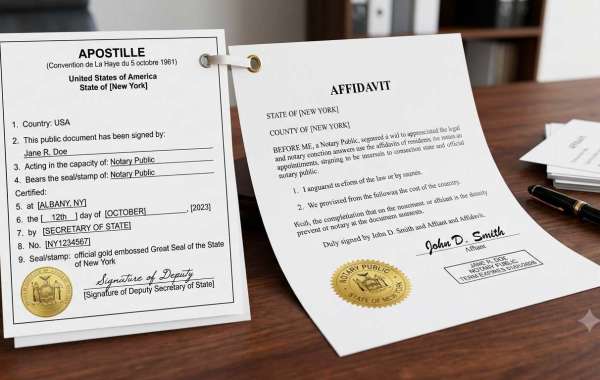

When documents such as affidavits and notarized declarations need to be submitted in another country, apostille authentication may be required to establish their validity for international use. Secure Apostille Services assists individuals and businesses with document authentication requirements and provides guidance on the appropriate process. For applicants who need Apostille services in chennai, understanding the difference between notarization, state-level authentication, and apostille is important before submitting documents to a foreign authority. The correct procedure depends on the type of document, its issuing authority, and the country where it will be used.
What Is an Affidavit Apostille?
An affidavit is a written statement in which a person declares that the information provided is true and signs the document before an authorized official, commonly a notary. Affidavits are frequently used for immigration, education, employment, property matters, marriage-related applications, name changes, financial declarations, and various legal or administrative purposes.
When an affidavit is intended for use in a foreign country that is a member of the Hague Apostille Convention, the receiving authority may request an apostille. An apostille is a form of authentication that confirms the authenticity of the signature, seal, or stamp appearing on a public document. It does not certify that every statement contained in the affidavit is factually correct.
For this reason, applicants should determine the requirements of the foreign authority before beginning the authentication process. Some organizations may require a notarized affidavit followed by apostille, while others may have additional requirements concerning format, wording, translation, or supporting documents.
Why Are Notary Documents Apostilled?
Notarization and apostille serve different purposes. A notary generally verifies the signing of a document, identity of the person signing, or execution of a declaration according to applicable procedures. Apostille authentication, on the other hand, is intended to facilitate recognition of an eligible public document in another country.
A notarized affidavit may therefore need further authentication before it can be accepted overseas. Simply having a notary stamp does not automatically mean that the document is ready for international submission.
For example, an applicant preparing documents for immigration may be asked to submit a declaration, sponsorship affidavit, single-status affidavit, name declaration, or financial affidavit. If the destination country requires apostille authentication, the applicant may need to have the document properly notarized and then processed through the applicable authentication channel.
Apostille Requirements Can Vary by Document
The requirements for apostilling an affidavit or notary document can differ depending on how the document was prepared and where it will be submitted. Applicants should first identify whether the document is a personal declaration, educational document, commercial document, or another category.
It is also important to ensure that names, dates, passport details, addresses, and other information are accurate before authentication. Errors discovered after apostille may require the document to be prepared and authenticated again.
Foreign authorities may also request certified translations. In such cases, applicants should confirm whether the translation needs to be completed before or after apostille and whether the receiving organization specifies a particular translator or format.
Difference Between Affidavit Apostille and Certificate Apostille
Affidavits are generally documents prepared and signed by individuals, whereas certificates such as birth, marriage, and educational certificates are issued by recognized authorities or institutions. Because their origins are different, the authentication process can also differ.
For example, someone applying for an overseas family visa may need a birth certificate apostille in bangalore for submission to a foreign authority. A birth certificate is an official civil document, so its authentication route is different from that of a personally prepared affidavit.
Similarly, applicants dealing with family, immigration, or international legal requirements may require a marriage certificate apostille in bangalore. Since a marriage certificate is an officially issued civil document, it should be processed according to the authentication requirements applicable to that document.
Educational documents are another common category. A student or professional moving overseas may require a degree certificate apostille in bangalore when the foreign university, employer, immigration authority, or professional organization asks for authenticated educational credentials.
These examples demonstrate why applicants should not assume that every document follows exactly the same apostille procedure. The document category and issuing authority can determine the appropriate authentication route.
General Process for Apostilling an Affidavit
Although requirements may vary, the general process for an affidavit intended for overseas use can involve several stages.
1. Prepare the Affidavit
The affidavit should contain the required declaration and relevant personal details. The wording should match the purpose for which the document is being submitted.
2. Notarize the Document
Where notarization is required, the affidavit is signed before an authorized notary. The notary verifies the execution according to applicable requirements.
3. Document Verification
Depending on the document type and authentication route, additional verification may be required before the document can proceed for apostille.
4. MEA Apostille
For eligible Indian documents intended for countries participating in the Hague Apostille Convention, the Ministry of External Affairs is responsible for issuing the apostille. The apostille is attached or affixed to the document through the authorized process.
5. Submission Overseas
Once apostilled, the document can be submitted to the relevant foreign authority along with any other documents, translations, application forms, or supporting evidence they require.
It is important to remember that an apostille authenticates the document for international recognition; it does not guarantee acceptance for every specific application. The final receiving authority determines whether the document satisfies its requirements.
Common Affidavits That May Require Apostille
Different applicants may need apostilled affidavits for different purposes. Some common examples include:
- Affidavit for name change
- Single-status or unmarried affidavit
- Affidavit of support
- Financial declaration
- Sponsorship affidavit
- Declaration of relationship
- Affidavit for immigration purposes
- Address declaration
- Power-related declarations
- Educational or professional declarations
- Statements required for legal or administrative applications
The exact wording and supporting documentation can depend on the purpose and destination country. Applicants should therefore avoid using a generic affidavit format without checking the requirements of the organization requesting it.
Apostille for Notarized Documents for Overseas Use
Notarized documents may be required for employment, immigration, education, business, marriage, property, or legal procedures in another country. Before submitting such documents, applicants should check whether the destination country accepts apostilles and whether the particular document qualifies for apostille authentication.
A common mistake is to assume that notarization alone is sufficient. In many international situations, the foreign authority needs an additional authentication mechanism. For Hague Convention countries, an apostille can simplify this process by providing a standardized certificate of authentication.
For countries or situations where apostille is not applicable, a different legalization procedure may be required. This is why confirming the destination country's document requirements before processing can help prevent delays and unnecessary expenses.
Why Choose Secure Apostille Services?
Handling document authentication independently can sometimes be confusing, particularly when multiple documents have different requirements. Secure Apostille Services helps applicants understand the documentation process and coordinate the required authentication steps.
Professional assistance can be useful when documents need to be checked for completeness, when applicants are unfamiliar with authentication procedures, or when several documents need to be processed for an overseas application.
Applicants should provide clear information about the destination country and intended purpose of the document. This makes it easier to determine whether apostille, legalization, notarization, translation, or another form of authentication may be required.
Final Thoughts
Apostille for affidavits and notary documents is an important step when certain Indian documents need to be recognized for use abroad. Understanding the distinction between notarization and apostille can help applicants prepare their paperwork correctly and reduce the possibility of rejection or processing delays.
Before starting the process, verify the requirements of the foreign embassy, university, employer, immigration authority, or other receiving organization. Make sure the affidavit contains accurate information, obtain the required notarization, and follow the applicable authentication procedure.
With the right documentation and proper preparation, the apostille process can be made considerably more straightforward for individuals who need affidavits and notarized documents for international use.