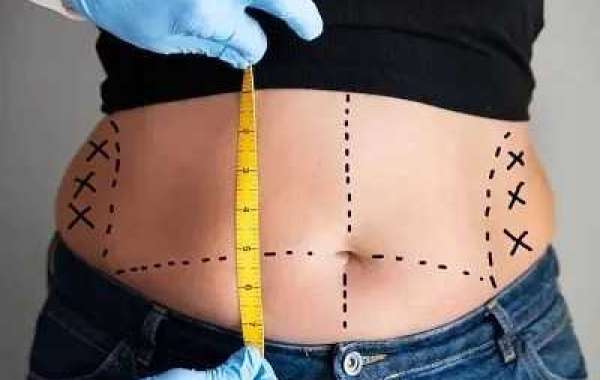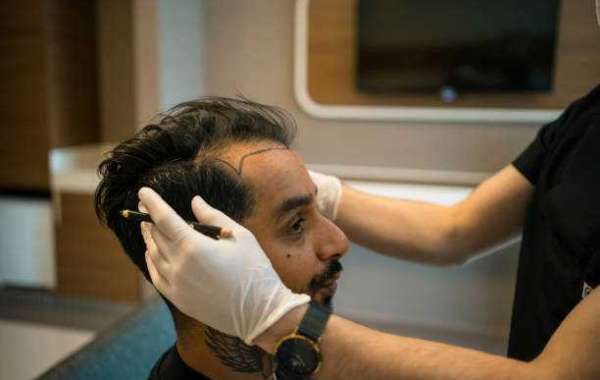

When donor follicles are unevenly distributed between the left and right sides of the scalp, harvesting the same number from each side is not necessarily appropriate. Hybrid Hair Transplant in Dubai can provide a planning framework for patients whose donor anatomy requires different harvesting strategies across FUE and FUT while maintaining a balanced donor appearance.
Why Donor Symmetry Matters
The donor area is often discussed as though it were a uniform band of permanent hair. In reality, density, follicular-unit composition, hair caliber and previous extraction can vary considerably from one side to another.
This becomes particularly important when a patient requires a substantial number of grafts. A symmetrical extraction pattern may look logical on paper but can create visible depletion if one side has fewer suitable follicles.
The Left and Right Donor Zones May Differ
Natural scalp anatomy is not perfectly symmetrical.
One side may have greater follicular density, thicker hair shafts or a higher concentration of multi-hair follicular units. Another side may contain finer hair or fewer transplantable follicles.
These differences can be subtle when the hair is long but become more noticeable after harvesting.
Previous Procedures Can Increase the Imbalance
A patient who has undergone an earlier FUE procedure may already have more extraction sites on one side.
Likewise, a previous FUT procedure can alter the tissue and donor distribution around a linear scar. New surgery must therefore begin with the donor anatomy that exists today, not the anatomy the patient had before the first procedure.
How Donor Mapping Identifies Asymmetry
Density Should Be Evaluated by Region
Rather than treating the entire donor zone as one unit, the surgeon can examine separate areas across the occipital and temporal regions.
This helps identify where suitable follicular units are concentrated and where extraction should be more conservative.
Follicular-Unit Composition Changes the Value of Each Area
A donor region containing many two- and three-hair units may provide more visual coverage than a region containing predominantly single-hair units.
Consequently, donor mapping should assess both the number of follicular units and the number of hairs contained within them.
Hair Caliber Influences Optical Yield
Thicker donor hairs can create stronger coverage after transplantation.
A region with slightly lower follicular density may still be valuable if its hair caliber is significantly greater. Surgical planning therefore needs to consider quality as well as quantity.
Why Equal FUE Extraction May Not Be Appropriate
FUE removes follicular units individually, which allows the extraction pattern to be adjusted according to local donor characteristics.
Stronger Areas Can Provide More Grafts
Where donor density and follicular stability are favorable, the surgeon may be able to harvest a greater proportion of grafts.
This does not mean extracting aggressively. The objective remains to maintain an acceptable donor appearance after healing.
Weaker Areas Can Be Protected
A lower-density region may require fewer extractions.
If the same number of follicles were removed from both a dense and sparse area, the visual impact could be very different.
Extraction Should Be Distributed Thoughtfully
The final donor appearance depends on the pattern of extraction, not just the total number of grafts removed.
Carefully distributed harvesting can reduce the risk of creating a noticeable difference between the two sides.
The Role of FUT in an Asymmetrical Donor Plan
FUT approaches donor harvesting differently because a strip of tissue is removed rather than individual follicular units being extracted one at a time.
A Strip Can Provide a Substantial Graft Contribution
For patients with significant recipient-area requirements, FUT can provide a considerable number of follicular units from a defined donor region.
The tissue is then dissected under magnification to separate individual grafts.
Scalp Mobility Must Be Considered
FUT requires closure of the donor wound after strip removal.
Scalp laxity, tissue characteristics and previous surgery can therefore influence whether FUT is appropriate and how the donor strip should be planned.
A Hybrid Plan Can Reduce Dependence on One Harvesting Method
If the patient's donor anatomy is uneven, combining methods may allow the surgical team to obtain grafts without relying excessively on the weakest individual extraction zones.
The precise balance depends on donor quality, graft demand and recipient priorities.
How a Hybrid Strategy Can Preserve Donor Balance
A combination of FUE and FUT should have a specific anatomical rationale.
FUE Can Be Used Selectively
Individual extraction can be directed toward suitable areas where the follicular units have desirable characteristics.
This can provide flexibility for graft selection while avoiding unnecessary harvesting from weaker zones.
FUT Can Contribute Bulk
Where anatomy permits, a donor strip can supply a larger group of grafts.
This may be useful when the recipient area requires substantial coverage and extensive FUE extraction could create excessive donor depletion.
Donor Appearance Remains the Final Constraint
Even with two techniques available, the donor area has a finite capacity.
A successful strategy must consider how the back and sides of the scalp will look after both procedures rather than judging success solely by the number of grafts transferred.
Graft Allocation Should Follow Recipient Needs
The grafts obtained from different donor regions do not necessarily have to be distributed randomly.
| Graft Characteristic | Potential Use |
|---|---|
| Fine single-hair units | Frontal transition |
| Strong single-hair units | Hairline refinement |
| Two-hair units | Frontal and mid-scalp coverage |
| Three-hair units | Areas requiring stronger visual bulk |
| Thick-caliber grafts | Zones where optical coverage is important |
| Mixed follicular units | Strategic distribution according to anatomy |
Fine Grafts Can Soften the Front
The leading edge of a hairline benefits from a gradual transition.
Finer units can help create a softer appearance before stronger follicular units are introduced farther behind the frontal border.
Stronger Units Can Build Depth
The central frontal scalp and mid-scalp may benefit from stronger follicular units where appropriate.
This can increase visual coverage without requiring the same number of grafts that would be needed if every recipient site were filled with fine units.
Asymmetry in the Recipient Area Also Matters
Donor imbalance is only half of the planning equation.
Facial Asymmetry Is Normal
The two sides of a patient's face are rarely identical.
The surgeon may therefore need to assess whether apparent hairline asymmetry is actually part of the patient's natural facial structure before attempting to make the hairline mathematically symmetrical.
Temple Angles Can Differ
The temporal regions have different directional patterns from the central frontal scalp.
A transplant that forces both sides into an identical geometric shape may look less natural than one that respects subtle anatomical differences.
Graft Distribution Should Follow Visual Balance
The objective is not necessarily to place identical numbers of grafts on the left and right.
Instead, the surgeon can consider how density, direction, facial framing and existing hair interact to create an overall balanced appearance.
Patients With a Previous FUE Procedure
Asymmetrical donor harvesting is particularly relevant in revision cases.
Previous Extraction Patterns Need to Be Located
A prior FUE procedure may have removed more grafts from one side than another.
If those areas are not identified before new harvesting, the second procedure could compound the imbalance.
Existing Donor Density Should Be Reassessed
Historical graft numbers do not reveal the current condition of the donor area.
The surgeon should evaluate remaining density and follicular-unit quality before estimating how much additional harvesting is possible.
The New Plan May Need to Be Uneven
It can be appropriate for the second procedure to extract different numbers of grafts from different regions.
The goal is a sustainable donor appearance, not mathematical symmetry in the number of extractions.
Patients With a Previous FUT Procedure
Previous strip surgery introduces another set of considerations.
The Existing Scar Must Be Located
The position and condition of a previous FUT scar influence the available donor tissue.
The surgeon must determine how the remaining donor area can be used without creating unnecessary tension or compromising the existing scar.
Tissue Mobility Can Be Different
Scar tissue does not behave exactly like untouched scalp tissue.
Assessment of scalp laxity and tissue quality is therefore particularly relevant before considering another strip procedure.
FUE May Provide Additional Flexibility
If additional grafts are needed but another FUT strip is unsuitable, carefully planned FUE may offer an alternative source of donor follicles.
Whether this is appropriate depends on the remaining density and previous extraction history.
When Uneven Donor Density Is Actually an Advantage
Asymmetry is not automatically a surgical disadvantage.
Stronger Zones Can Be Used Strategically
If one donor region contains stronger hair, those grafts can potentially be allocated to areas where they produce greater visual benefit.
Weaker Zones Can Be Preserved
Protecting less robust donor regions can help maintain a more natural appearance over time.
Graft Quality Can Compensate for Quantity
A carefully selected graft with favorable hair caliber and follicular composition may contribute more visual coverage than several weaker units.
This is one reason graft numbers should never be considered independently from graft characteristics.
Avoiding Overharvesting on the Stronger Side
A dense donor region can create temptation to remove more follicles than necessary.
Immediate Density Can Be Misleading
A donor area may look very full before surgery and still have a limited sustainable reserve.
Removing a large number of follicles from the strongest side can eventually create visible thinning, particularly if surrounding native hair later becomes finer.
Future Hair Loss Must Be Considered
The donor region itself should be evaluated for long-term stability.
If some hairs are at risk of future miniaturization, they may not represent equally reliable transplant resources.
Conservative Harvesting Protects Future Options
A patient may require another procedure years later.
Preserving donor capacity can therefore be more valuable than achieving the maximum possible graft number during the first operation.
Dubai-Specific Postoperative Planning
The climate in Dubai can make donor recovery more demanding from a lifestyle perspective.
Heat Can Increase Discomfort
Sweating may make the donor area feel irritated during early healing.
Patients should follow their medical team's guidance regarding exercise, outdoor activity and other situations that increase sweating.
Sun Exposure Requires Attention
Direct sunlight should generally be limited while the scalp is healing.
This is particularly relevant for patients who commute outdoors or regularly participate in outdoor activities in Dubai.
Work and Social Commitments
Temporary redness, swelling or scabbing may remain visible during the early recovery period.
Patients with frequent professional meetings or social events should discuss the expected recovery timeline when scheduling the procedure.
How to Evaluate the Donor Area Before Surgery
Measure Density Rather Than Relying on Appearance
A visual examination can underestimate differences between donor regions.
Magnified assessment can provide a clearer picture of follicular-unit density and composition.
Identify Previous Extraction
Any earlier FUE harvesting should be mapped as accurately as possible.
This helps the surgeon determine which areas have already contributed grafts and which still contain a stronger reserve.
Assess Scalp Laxity
If FUT is being considered, scalp mobility becomes a significant planning variable.
The surgeon needs to determine whether the scalp can accommodate the proposed donor strip and closure appropriately.
Compare Graft Demand With Donor Capacity
The recipient area should be mapped before a final graft estimate is made.
This prevents the surgical plan from promising more coverage than the donor area can realistically support.
Recovery After a Hybrid Procedure
The recovery process involves both donor and recipient areas.
Temporary redness, swelling, itching, scabbing and mild discomfort can occur during the initial healing period. Patients should follow the prescribed washing routine, protect the scalp, avoid scratching and observe restrictions on strenuous activity.
The transplanted hairs may shed temporarily before entering a new growth cycle. This is why the early postoperative appearance should not be used to judge the final result.
As growth progresses, the transplanted follicles gradually produce longer and more mature hairs, allowing density and blending to become easier to evaluate.
Questions About Asymmetrical Donor Harvesting
Does donor density have to be identical on both sides?
No. Natural donor anatomy is often somewhat variable. What matters is identifying those differences and adjusting harvesting accordingly.
Should the same number of grafts be removed from each side?
Not necessarily. Extraction can be adapted to local density, follicular-unit composition, hair caliber and previous harvesting.
Can FUE help manage donor asymmetry?
Yes. Because FUE removes individual follicular units, extraction can be distributed according to the strength of different donor regions.
Why might FUT be included?
FUT can provide a substantial graft contribution when the patient's anatomy is suitable, potentially reducing the need for extensive individual extraction from weaker donor zones.
Can previous FUE cause uneven donor density?
Yes. Earlier extraction may have been concentrated more heavily in certain areas, making a new donor assessment essential before another procedure.
Is a perfectly symmetrical donor area necessary?
No. The objective is a visually balanced and sustainable donor appearance, not identical follicle counts on both sides.
The Strategic Investment
Donor asymmetry demonstrates why hair transplantation should be planned around anatomy rather than a fixed extraction formula. The left and right sides of the donor region may differ in density, hair caliber and follicular-unit composition, while previous surgery can create additional variation.
For patients requiring substantial restoration, Hybrid Hair Transplant in Dubai can be considered when FUE and FUT offer complementary ways to manage an uneven donor supply. A thoughtful plan may selectively harvest stronger regions, protect weaker areas, allocate grafts according to their characteristics and preserve donor capacity for future needs.
Patients researching individualized hair-restoration planning can explore hair restoration information for an overview of available approaches. For clinic-specific consultation and treatment information, Tajmeels Clinic provides further guidance.