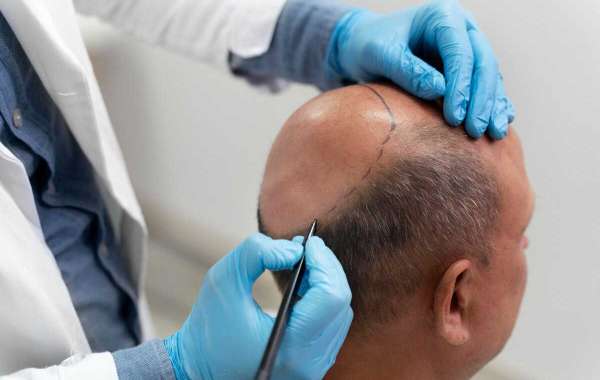

When hair becomes thinner, the scalp may gradually become more visible through the remaining strands. This can happen around the front, middle portion, crown, or temples. In the early stages, the change may only be noticeable under bright lighting, but progressive thinning can eventually affect the overall appearance of the hairstyle.
FUE Hair Transplant may be an option for suitable individuals who want to improve selected areas where hair density has decreased. The technique allows individual follicular units to be extracted from a suitable donor area and carefully placed into recipient regions.
For people considering hair transplant in Islamabad, understanding how visible scalp areas are assessed can help them make informed decisions.
Why Does the Scalp Become More Visible?
The scalp becomes more noticeable when the hair covering it becomes thinner or less dense. This can happen when individual strands become finer or when the number of actively growing follicles decreases.
Genetic hair loss is one common cause, although the pattern and speed of thinning vary between individuals.
Some people notice increased visibility mainly around the frontal hairline, while others experience more widespread thinning.
How Can FUE Improve Coverage?
FUE uses individual follicular units harvested from a suitable donor region. These grafts can be placed into carefully selected recipient areas where additional hair coverage may be useful.
The distribution of grafts is important. Instead of treating every visible scalp area equally, the doctor can prioritize regions that have the greatest effect on overall appearance.
The objective is to create a balanced relationship between transplanted hair and existing follicles.
Can FUE Treat Different Areas?
Depending on the individual's situation, FUE may be considered for areas such as:
- Frontal thinning
- Receding temples
- Mid-scalp density loss
- Selected crown areas
- Small localized gaps
The appropriate treatment area depends on the cause and pattern of hair loss as well as the available donor supply.
Why Is the Frontal Region Different?
The front of the scalp requires particularly careful planning because it directly frames the face.
A natural hairline usually has a soft transition, with finer hairs near the leading edge and progressively stronger density behind it.
When FUE is used in this region, grafts need to be placed with appropriate direction and spacing. An excessively straight or dense hairline may look less natural.
What About Visible Scalp in the Crown?
The crown has a distinct circular growth pattern. Hair direction changes around the central whorl, making graft placement more complex.
When crown restoration is appropriate, the doctor can assess the existing pattern and determine whether additional coverage may be beneficial.
However, the crown should be considered alongside other areas of hair loss. Donor resources may need to be distributed strategically if thinning is occurring across multiple regions.
Does Existing Hair Affect the Procedure?
Yes. Existing hair is an important consideration when treating visible scalp areas.
If natural hair is still present, transplanted follicles may need to be placed between existing hairs. This requires careful planning to avoid unnecessarily disturbing surrounding follicles.
The doctor may also consider whether the existing hair is stable or likely to become thinner in the future.
How Important Is Donor Supply?
FUE depends on having an adequate supply of suitable donor follicles.
Before treatment, the donor area can be evaluated for density, hair characteristics, and overall suitability. Since donor follicles are limited, they should be used carefully.
A long-term strategy can help determine which areas deserve priority and how available grafts should be distributed.
Can Hair Texture Make the Scalp Look Less Visible?
Hair characteristics can influence the visual appearance of coverage.
Thicker hair can often provide stronger coverage, while fine hair may allow more scalp visibility. Wavy or curly hair can produce different visual effects from straight hair.
Hair color and the contrast between the scalp and hair can also influence how noticeable thinning appears.
These characteristics should be considered when establishing realistic expectations for FUE.
What Happens After FUE?
The scalp requires time to recover after the procedure. Temporary redness, small crusts, or mild sensitivity can occur during the early healing period.
The transplanted follicles then progress through their natural growth cycle. New growth develops gradually, and the final appearance takes time to become established.
Patients should follow the specific aftercare guidance provided by their medical team during recovery.
Is FUE Suitable for Everyone With Visible Scalp?
Not necessarily. The visibility of the scalp alone does not determine whether transplantation is appropriate.
The doctor may evaluate the cause of thinning, donor availability, existing hair, scalp condition, age, and the progression of hair loss.
For people researching hair transplant in Islamabad, an individualized consultation can help determine whether FUE is a reasonable option.
How Can Dr Adnan Bashir Assess Your Hair Loss?
A consultation with Dr Adnan Bashir can provide an opportunity to evaluate the overall pattern of thinning rather than focusing on one visible area.
The assessment may include the frontal region, temples, mid-scalp, crown, donor area, and existing hair. Future hair-loss considerations can also be part of the treatment discussion.
This helps establish realistic expectations before deciding on transplantation.
Enfield Royal Clinic in Islamabad
For individuals searching for hair transplant in Islamabad, selecting a clinic that focuses on personalized treatment planning can be important.
At Enfield Royal Clinic in Islamabad, patients can discuss areas where the scalp has become more visible and explore whether FUE may be appropriate.
The treatment plan can be designed around individual hair characteristics, donor capacity, existing density, and long-term restoration goals.
What Should You Expect From FUE?
FUE can improve the appearance of selected areas for suitable candidates, but results vary. Donor quality, hair characteristics, graft distribution, existing follicles, and future hair loss can all influence the outcome.
The goal should be realistic improvement rather than expecting exactly the same density as naturally growing hair.
Final Thoughts
Visible scalp areas can be a noticeable sign of progressing hair thinning. FUE Hair Transplant may provide a targeted approach for suitable individuals who want to improve coverage in selected regions.