
Generative AI is transforming how we create content, analyze information, and tackle problems. From chatbots to AI image generators, these systems rely on different training stages to produce useful results. Two important stages are pretraining and post-training. Understanding how they work helps beginners learn how generative AI models develop knowledge and become more useful in real-world applications. If you want to build a strong foundation in artificial intelligence, consider enrolling in an AI Course in Kolkata at FITA Academy to strengthen your understanding of these concepts.
What is Pretraining in Generative AI
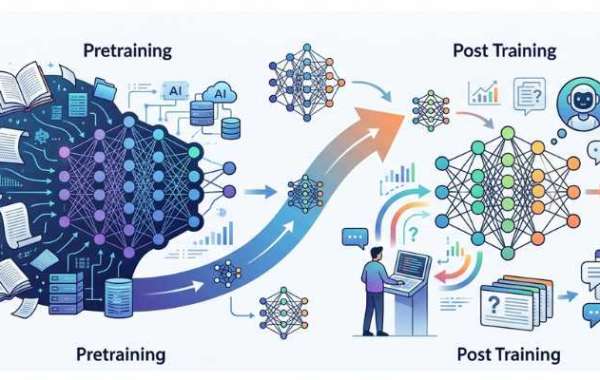
Pretraining is the initial stage of developing a generative AI model. During this stage, the model learns patterns from a large collection of data, such as books, articles, websites, images, or other digital content. The type of data depends on the model being developed.
For example, a large language model learns how words, sentences, and ideas relate to one another. It often practices predicting the next token in a sequence of text. Through repeated training, the model gradually learns grammar, common patterns, and relationships between concepts.
Pretraining requires significant computing power, large datasets, and time. The result is a foundation model that can recognize patterns and generate content. However, a pretrained model may not always follow instructions correctly or provide answers in the format users expect.
What is Post-Training in Generative AI
Post-training takes place after the initial pretraining stage. Its purpose is to make a model more useful, reliable, and suitable for specific tasks. Instead of learning broad patterns from massive datasets alone, the model receives additional training that guides its responses and behavior.
This stage can include supervised fine-tuning, preference-based training, and other optimization techniques. During supervised fine-tuning, the model learns from examples of questions and appropriate answers. This helps it understand instructions and respond in a more organized way.
Some post-training methods also use human feedback or comparisons between different responses. These methods help guide the model toward answers that are more helpful, relevant, and aligned with user expectations. Post training does not guarantee perfect accuracy, but it can significantly improve the quality of interactions.
Key Differences Between Pretraining and Post-Training
Although both stages improve an AI model, they serve different purposes.
Pretraining focuses on learning general patterns from large datasets. It gives the model its initial capabilities, including language patterns and relationships between concepts. Post-training focuses on improving how the model uses those capabilities to respond to instructions and complete specific tasks.
Another difference is the type of data used. Pretraining commonly relies on large-scale collections of raw or lightly processed data. Post-training often uses carefully prepared examples, demonstrations, or preference feedback.
The training objectives also differ. Pretraining typically teaches the model to predict patterns in its input, while post training encourages more useful responses and better instruction following. Together, these stages help turn a broadly trained model into a practical AI assistant.
Why Pretraining and Post-Training Matter
Both stages are essential to many modern generative AI systems. Without pretraining, a model would lack the broad patterns needed to generate meaningful content. Without suitable post-training, it might struggle to follow instructions, maintain a helpful conversational style, or produce responses that meet user expectations.
These stages also influence how businesses use AI. Applications such as customer support assistants, content generation tools, and research assistants benefit from models that combine broad knowledge with task-oriented behavior.
However, training alone cannot eliminate every limitation. Models may still generate incorrect information, reflect biases in their data, or misunderstand complex requests. Testing, evaluation, and ongoing improvements remain important for building reliable AI applications.
How Pretraining and Post-Training Work Together
Pretraining and post-training should be viewed as connected stages rather than competing approaches. Pretraining builds the model's general capabilities, while post-training shapes how those capabilities are applied.
For example, a pretrained language model may understand sentence structure and recognize relationships between words. After post-training, it may become better at answering questions, summarizing documents, or following a user's instructions. This combination supports many of the conversational tools people use today.
As generative AI continues to evolve, understanding these training stages can help you explore advanced topics such as large language models, model fine-tuning, and AI application development. To develop practical knowledge and expand your understanding of modern AI technologies, explore a Generative AI Course in Kolkata and take the next step toward building your generative AI skills.
Pretraining and post training play different but complementary roles in generative AI. Pretraining teaches models broad patterns from large datasets, while post-training helps them respond more effectively to human instructions. Together, these stages form an important foundation for developing useful generative AI applications. Understanding their differences makes it easier to explore how AI models are built, improved, and applied across industries.



