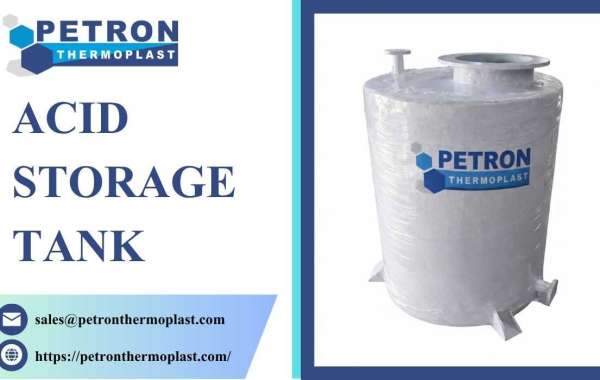

Industrial facilities that handle corrosive chemicals need storage equipment designed for their specific process requirements. An industrial acid storage tank provides a dedicated solution for storing acids used in chemical manufacturing, water treatment, metal finishing, and other industrial operations. The right tank design helps manage chemical storage, supports safe transfer, and reduces the risk of leaks caused by unsuitable materials or poor fabrication.
Every facility has different storage requirements. Some plants need compact tanks for regular chemical consumption, while others require large-capacity tanks for bulk storage. Tank capacity, construction material, wall thickness, connections, and safety accessories must be selected according to the stored acid and operating environment.
Petron Thermoplast offers customized acid storage tank solutions for industrial applications. Tanks can be planned around project capacity, available space, chemical compatibility, and installation requirements.
This blog explains the benefits of custom-capacity acid storage tanks, material options, technical considerations, industrial applications, and factors to review before ordering.
What Is an Industrial Acid Storage Tank?
An industrial acid storage tank is a container designed to store and contain acidic liquids under specified operating conditions. Depending on the application and material compatibility, it may be used for hydrochloric acid, sulfuric acid, phosphoric acid, or other process chemicals.
Unlike conventional water storage tanks, acid storage tanks require careful material selection. The construction material must withstand the particular acid, its concentration, operating temperature, and exposure conditions. The tank must also be designed to support the stored liquid's weight and any relevant environmental or installation loads.
Industrial acid storage tanks are used in chemical plants, water treatment facilities, electroplating units, fertilizer manufacturing, and metal finishing operations. They can be customized with suitable inlet and outlet connections, drains, vents, level indicators, access openings, and other accessories.
Why Choose an Acid Storage Tank with Custom Capacity Options?
Standard tank dimensions may not suit every facility. Custom capacity options allow industrial buyers to plan storage around chemical consumption, delivery schedules, production needs, and available installation space.
- Capacity Based on Chemical Consumption
The required tank volume depends on daily consumption, delivery frequency, production demand, and reserve requirements. A properly sized tank helps maintain a reliable chemical supply without requiring unnecessarily frequent replenishment.
- Better Use of Available Space
Industrial facilities may have restrictions on floor area, building height, foundation dimensions, and access routes. Customized tank dimensions can help accommodate these conditions while preserving adequate space for inspection and maintenance.
- Flexible Tank Configurations
Depending on the application, tanks can be designed in vertical cylindrical, horizontal cylindrical, rectangular, or other suitable configurations. The final design should consider capacity, liquid properties, structural stability, and installation conditions.
- Customized Connections and Accessories
Tanks can be configured with suitable filling points, discharge nozzles, drains, vents, overflow arrangements, and level-monitoring provisions. Planning these features before fabrication can simplify installation and integration with existing process equipment.
- Support for Future Expansion
When selecting a tank, buyers should consider expected changes in production and chemical consumption. Planning the required storage capacity early can help reduce the need for premature replacement or additional installation work.
Materials Used for Industrial Acid Storage Tanks
Material selection is one of the most important decisions when specifying an acid storage tank. Different materials offer different levels of chemical resistance, mechanical strength, temperature capability, and fabrication flexibility.
HDPE Acid Storage Tank
High-density polyethylene (HDPE) is used in various industrial chemical storage applications. It offers lightweight construction and resistance to a range of compatible chemicals. Its suitability depends on the acid type, concentration, temperature, density, and tank design.
PP and PPH Acid Storage Tank
Polypropylene (PP) and polypropylene homopolymer (PPH) are considered for selected acid and alkali storage applications. These materials can be fabricated into customized tank configurations, subject to chemical compatibility and operating limits.
FRP Acid Storage Tank
Fiber-reinforced plastic (FRP) tanks can offer structural strength and chemical resistance when manufactured with a resin system suitable for the stored acid. The resin type, reinforcement, laminate design, and operating conditions must be evaluated before selection.
PVDF-Lined or Dual-Laminate Tank
For demanding chemical applications, a suitable thermoplastic lining combined with structural reinforcement may be considered. Dual-laminate designs generally combine a chemically resistant inner layer with an FRP outer structure. The liner material must be compatible with the specific chemical service.
Important: No single tank material is suitable for every acid. Confirm compatibility for the exact acid, concentration, temperature, and storage conditions before finalizing the material.
Industrial Applications of Custom Acid Storage Tanks
Chemical Manufacturing Plants
Chemical manufacturers use acid storage tanks to hold raw materials and process chemicals. Customized capacities can help coordinate storage with production schedules, chemical deliveries, and transfer requirements.
Water and Wastewater Treatment
Water treatment plants may use acids for pH adjustment, equipment cleaning, or specific treatment processes. The tank and connected components must be compatible with the actual chemical and its operating conditions.
Electroplating and Metal Finishing
Electroplating and metal finishing operations can involve acidic process solutions. Suitable tanks support chemical containment and transfer to the required treatment or processing equipment.
Fertilizer and Process Industries
Some fertilizer and general manufacturing processes use acids as raw materials or process chemicals. Tank capacity and connection arrangements should match the site's chemical handling procedures.
Industrial Pickling Operations
Metal pickling facilities use acidic solutions to remove scale and prepare metal surfaces. Storage tanks may be designed for these applications when the construction material and tank design suit the specific acid and service conditions.
How to Select the Right Acid Storage Tank?
Before requesting a quotation, review the following factors.
Identify the acid. Provide the chemical name, concentration, and relevant safety information. Different acids may have very different compatibility requirements.
Calculate the required capacity. Consider daily consumption, delivery intervals, reserve requirements, and future production demand. Distinguish total tank volume from usable operating volume.
Confirm liquid density. Acid solutions can be denser than water. The design must account for the actual specific gravity of the stored liquid.
Check operating temperature. Provide normal and maximum storage temperatures, along with expected ambient conditions. Temperature can affect chemical resistance and material strength.
Review the installation location. Available space, foundation conditions, weather exposure, access for inspection, and transportation limitations may influence the tank configuration.
Plan the connections. Confirm filling points, discharge lines, drains, vents, level monitoring, and compatibility with connected pumps and valves.
Consider containment and safety. Depending on the chemical and applicable requirements, secondary containment, overflow management, suitable ventilation, warning labels, and emergency procedures may be necessary.
Safety, Installation, and Maintenance
Proper installation and regular inspection help support safe tank operation. Install the tank on an appropriately engineered foundation or support structure capable of carrying the full operating load. Connected piping should not place excessive stress on the tank nozzles.
Inspect joints, connections, and tank surfaces before introducing the chemical. Follow the manufacturer's filling, operating, and inspection instructions. Do not expose an atmospheric tank to pressure or vacuum unless it has been specifically designed for those conditions.
Routine inspections should check for leakage, visible deformation, material damage, and problems with fittings or level indicators. Cleaning and maintenance must follow procedures compatible with the stored acid and tank material. Personnel should use appropriate protective equipment and follow the site's approved chemical safety procedures.
Why Choose Petron Thermoplast?
Petron Thermoplast provides industrial thermoplastic products and customized chemical storage tank solutions. Every project can have different capacity, material, and installation requirements, so tank specifications should be based on the actual application rather than a standard size alone.
When discussing your requirements, share the chemical name, concentration, desired capacity, operating temperature, installation dimensions, and preferred connection arrangements. Drawings or existing equipment specifications can also help clarify the project.
Conclusion
An industrial acid storage tank with custom capacity options helps facilities plan chemical storage around production demand, available space, and handling procedures. Selecting the right material, capacity, configuration, and accessories is essential for reliable performance. Petron Thermoplast offers customized acid storage tank solutions for industrial applications. Discuss your project requirements with the team to identify a suitable design based on chemical compatibility, operating conditions, and installation needs.