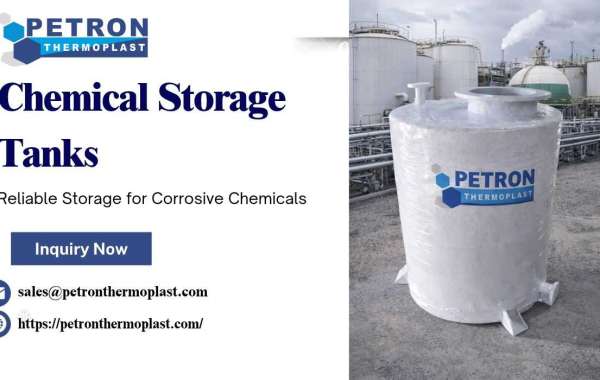

Large industrial facilities require reliable storage systems to manage chemicals, process liquids and raw materials. Chemical storage tank play an important role in maintaining organized operations across manufacturing plants, chemical processing units, water treatment facilities and other industrial environments. These facilities often handle different types of liquids, each with specific storage requirements. Selecting the right tank material, capacity, and design and fabrication arrangement is therefore essential.
Industrial Chemical Storage Tank Solutions help businesses manage bulk liquid storage according to their operational requirements. From compact process tanks to large-capacity storage systems, customized tank designs can support different plant layouts and chemical handling processes.
Petron Thermoplast offers industrial plastic tank solutions for customized project requirements. With different material options and fabrication possibilities, businesses can explore suitable storage arrangements for their industrial applications.
Understanding Industrial Chemical Storage Tanks
An industrial chemical storage tank is designed to hold chemicals and process liquids within a controlled storage arrangement. These tanks are used for storing raw materials, intermediate liquids, treatment chemicals and other industrial fluids before they are transferred to production equipment or another storage area.
Unlike general-purpose water tanks, chemical storage tanks must be selected according to the properties of the stored liquid. Factors such as chemical concentration, temperature, density, operating pressure and exposure conditions influence the material and tank design.
Large facilities may require multiple tanks with different capacities and configurations. Proper planning helps integrate storage tanks with pumps, pipelines, valves, level indicators and transfer systems.
Types of Industrial Chemical Storage Tanks
Different tank designs are available to accommodate industrial storage and process requirements.
- Vertical Chemical Storage Tank
Vertical chemical storage tanks are commonly considered where floor space is limited and sufficient installation height is available. Their upright design can accommodate substantial storage volumes while maintaining a relatively compact footprint.
They may be used for storing compatible acids, alkalis, treatment chemicals and industrial liquids, depending on material selection.
- Horizontal Chemical Storage Tank
Horizontal tanks are suitable for selected installations where height restrictions or equipment arrangements make a horizontal design more practical. They can be customized according to available space, required capacity and connection requirements.
- Rectangular Chemical Storage Tank
Rectangular tanks are useful for industrial facilities with specific space limitations or process layouts. Their dimensions can be planned to fit designated installation areas, subject to structural and fabrication considerations.
- Process Chemical Tank
Process tanks are integrated into industrial operations where liquids need to be held temporarily during manufacturing or treatment stages. They may include connections for filling, draining, circulation and process equipment.
- Dosing and Day Tanks
Dosing tanks are used in chemical dosing arrangements, while day tanks provide storage for chemicals needed during a particular operating period. Their capacity and configuration depend on the dosing equipment and process requirements.
Common Materials Used for Chemical Storage Tanks
Material selection is one of the most important decisions when planning an industrial chemical storage system.
PP (Polypropylene) Chemical Storage Tank
PP tanks are used in various industrial applications where chemical compatibility, lightweight construction and corrosion resistance are important. They can be considered for selected acid, alkali and process liquid storage requirements.
PPH Chemical Storage Tank
PPH, or polypropylene homopolymer, is used in industrial tank fabrication for applications requiring suitable chemical resistance and thermoplastic construction. It is commonly considered for compatible chemical processing and storage systems.
PVDF Chemical Storage Tank
PVDF is a high-performance fluoropolymer used in specialized chemical handling applications. It may be considered where particular chemical resistance and operating conditions require a more specialized material.
HDPE Chemical Storage Tank
HDPE tanks are used in various industrial liquid storage applications. Their lightweight construction and impact resistance make them suitable for selected storage requirements, provided the chemical and operating conditions are compatible.
FRP and Lined Tank Solutions
FRP tanks and lined tank constructions may also be considered for specific industrial applications. The selection depends on the stored chemical, liner material, structural requirements and operating environment.
Important: No tank material is suitable for every chemical. Always verify compatibility with the exact chemical, concentration, temperature and operating conditions before finalizing the tank design.
Important Features of Industrial Chemical Storage Tanks
A well-planned chemical storage tank should match the facility's operational and installation requirements.
Customized Capacity: Tank capacity can be selected according to storage demand, consumption rate and replenishment schedules.
Corrosion Resistance: The selected material should withstand the stored chemical under the specified operating conditions.
Suitable Inlet and Outlet Connections: Nozzles and connections can be positioned according to pipeline routes, transfer equipment and plant layout.
Level Monitoring Arrangement: Level indicators or compatible monitoring devices help operators check the liquid level inside the tank.
Drainage and Cleaning Access: Suitable drain connections and access arrangements can support maintenance and cleaning activities.
Structural Support: Tank construction and support arrangements must account for liquid density, filled weight, installation conditions and applicable engineering requirements.
Safety Arrangements: Venting, overflow protection, secondary containment and other safety provisions should be considered according to the chemical and facility risk assessment.
Industrial Applications of Chemical Storage Tanks
Chemical storage tanks are used across several industries where controlled liquid storage is part of daily operations.
Chemical Manufacturing Plants
Chemical manufacturers use storage tanks for raw materials, intermediate chemicals and process liquids. Multiple tanks may be required to support different production stages.
Water and Wastewater Treatment
Treatment facilities use tanks for storing compatible chemicals used in water conditioning, disinfection and wastewater treatment processes.
Pharmaceutical Manufacturing
Pharmaceutical facilities may require specialized storage arrangements for process chemicals and compatible liquids. Material selection must follow the relevant hygiene and process requirements.
Electroplating and Metal Finishing
Electroplating facilities use chemical storage and process tanks for compatible treatment solutions, rinsing liquids and other process chemicals.
Fertilizer and Agrochemical Industries
These industries may require storage systems for selected raw materials, additives and process liquids.
Industrial Manufacturing
Manufacturing plants use chemical storage tanks to organize liquid inventory and maintain a continuous supply to production equipment.
How to Select the Right Chemical Storage Tank for a Large Facility?
Choosing a tank involves more than deciding its storage capacity. Several technical and operational factors must be evaluated.
- Identify the Chemical: Confirm the chemical name, concentration and relevant safety information.
- Determine Storage Capacity: Calculate the required working volume, storage duration and replenishment frequency.
- Select the Material: Compare PP, PPH, PVDF, HDPE and other suitable materials according to chemical compatibility.
- Check Operating Conditions: Consider liquid temperature, density, pressure or vacuum conditions where applicable.
- Review Tank Dimensions: Measure the installation area and identify height, width and access restrictions.
- Plan Connections: Determine the number and position of inlet, outlet, drain, overflow and instrument connections.
- Consider Safety Requirements: Evaluate ventilation, secondary containment, access, inspection and emergency arrangements.
- Verify Engineering Details: Review drawings, fabrication procedures, structural design and applicable project standards before manufacturing.
Customized Chemical Storage Tank Fabrication
Large industrial facilities often have unique storage requirements. Standard tank dimensions may not always suit available space, pipeline routing or process equipment connections.
Customized fabrication can address requirements such as:
- Vertical, horizontal and rectangular tank configurations.
- Project-specific tank dimensions and capacities.
- Inlet, outlet and drain nozzle arrangements.
- Flanged or other compatible connection options.
- Level indicator and monitoring arrangements.
- Tank supports and installation provisions.
- Access openings and maintenance arrangements.
- Compatible lining or special material requirements.
Why Choose Petron Thermoplast?
Petron Thermoplast focuses on industrial thermoplastic products and customized solutions for chemical handling and piping applications. We understand that large facilities require storage systems planned around their actual process requirements rather than standard dimensions alone.
Our chemical storage tank enquiries can cover:
- PP and PPH chemical storage tank requirements.
- PVDF and HDPE tank applications.
- Customized tank dimensions and configurations.
- Process, dosing and day tank requirements.
- Different nozzle and connection arrangements.
- Bulk project and export enquiries.
- Product information and technical discussions.
Conclusion
Industrial Chemical Storage Tank Solutions are essential for large facilities that manage bulk chemicals and process liquids. Selecting the appropriate tank material, capacity, design and connection arrangement helps create a storage system that fits the plant's operational needs.
PP, PPH, PVDF and HDPE offer different properties for selected industrial applications. The correct choice depends on chemical compatibility, operating conditions and engineering requirements. Petron Thermoplast supports enquiries for customized industrial plastic tanks and project-based storage requirements. Contact our team to discuss your application, technical specifications and bulk order needs.