
Let me start with a question that comes up in almost every consultation we have with women struggling with irregular periods, unexplained fatigue, or difficulty conceiving. They sit across from us and say: "I have tried everything. But my cycles are still all over the place." And then, almost as an afterthought, they add: "Do you think my weight has anything to do with it?"
The short answer is yes. Weight and hormones are deeply connected. As education consultants who spend a lot of time helping women understand their bodies before they walk into a doctor's office, we have seen how confusion around this topic leads to years of frustration. So let us walk through the facts clearly, without alarm, and without selling you anything.
The basic relationship: Fat tissue is not silent
Most people think of fat as just stored energy. That is not accurate. Fat tissue, or adipose tissue, is actually an active endocrine organ. It produces hormones and responds to hormones. The more fat tissue you have, and the more it changes in distribution, the more your overall hormonal balance shifts.
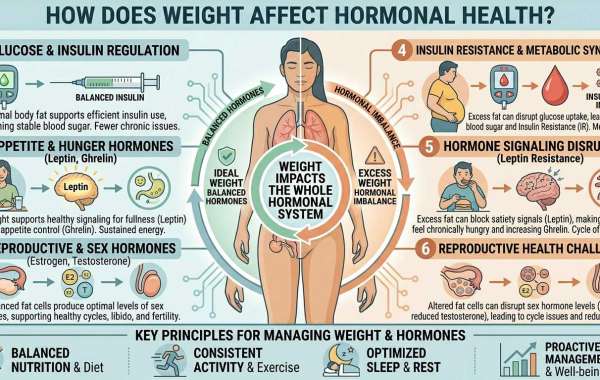
Two key players here are estrogen and insulin. Fat tissue converts androgens (male-type hormones) into estrogens. So when you have excess body fat, you end up with higher circulating estrogen levels than your body expects. That sounds harmless, but it is not. High estrogen relative to progesterone can disrupt ovulation, cause heavy or irregular periods, and contribute to conditions like fibroids and endometriosis.
On the flip side, being underweight also causes hormonal chaos. When body fat drops too low, the brain slows down or stops the production of gonadotropin-releasing hormone (GnRH). That is the master switch for your entire reproductive cycle. Without it, ovulation stops, periods disappear, and bone density starts to decline.
What happens when you are overweight? Let us break it down
Carrying excess weight, especially around the abdomen, leads to a state of chronic low-grade inflammation. That inflammation makes your cells less sensitive to insulin. Your pancreas then pumps out more insulin to compensate. This condition hyperinsulinemia tells your ovaries to produce more testosterone. High testosterone interferes with ovulation and can lead to polycystic ovary syndrome (PCOS), which affects up to 20 percent of women of reproductive age.
PCOS is a vicious cycle. Weight gain makes PCOS worse. PCOS makes weight loss harder because of insulin resistance. Many women get stuck in that loop for years without understanding why their diet and exercise are not working like they used to.
Beyond PCOS, high body fat also affects thyroid function. Leptin, the hormone that signals fullness, is produced by fat cells. When you have too much fat, leptin levels stay high, and your brain becomes resistant to its signals. That leads to overeating and further weight gain. It also interacts with thyroid hormones, often masking or mimicking hypothyroid symptoms like fatigue, cold intolerance, and slow metabolism.
What happens when you are underweight?
At the other end of the scale, being significantly underweight whether from restrictive eating, excessive exercise, or illness tells your body that resources are scarce. Your evolutionary response is to shut down non-essential functions. Reproduction is considered non-essential when survival is at risk.
The result is hypothalamic amenorrhea: periods stop, estrogen drops, and you may experience bone loss, vaginal dryness, and loss of libido. What many women do not realise is that this can happen even if you are not clinically underweight by BMI standards. Rapid weight loss, even from a normal starting weight, can trigger the same response.
Restoring hormonal health in this case does not mean more medication. It means gaining weight, usually body fat specifically, and reducing exercise intensity. For women who have spent years being praised for their thinness or athletic discipline, this can be a difficult mental shift.
The middle ground: Your ideal weight range for hormonal balance
There is no single perfect weight for every woman. But research consistently shows that a BMI between 18.5 and 24.9 is associated with the most regular menstrual cycles and the lowest risk of hormonal disorders. That said, BMI is a crude tool. Two women with the same BMI can have very different body compositions and very different hormonal profiles.
What matters more than the number on the scale is where you carry your weight. Waist-to-hip ratio is a better predictor of hormonal health. A waist measurement above 80 cm (31.5 inches) in women is linked to higher risks of insulin resistance and hormonal imbalance, even if your BMI is normal.
So do not obsess over losing "weight." Focus on losing abdominal fat specifically. That is where the hormonal payoff is.
What can you actually do? Practical steps before seeing a doctor.
If you suspect weight is affecting your hormones, here is what we advise the women we work with.
Get a basic blood panel first. Ask for fasting glucose, insulin, HbA1c, thyroid profile (TSH, free T3, free T4), estradiol, progesterone, testosterone, and SHBG. This gives you data instead of guesses.
Do not crash diet. Rapid weight loss, even if you are overweight, can temporarily worsen hormonal imbalance because your body perceives it as stress. Aim for 0.5 to 1 kg per week maximum.
Eat protein at every meal. Protein stabilises blood sugar and insulin. That directly helps PCOS and metabolic issues.
Do not fear carbohydrates, but choose them wisely. Whole grains, legumes, vegetables. Avoid white flour, white rice, and sugar.
Strength training twice a week. Muscle improves insulin sensitivity far more than cardio alone. A combination of both is best
Sleep seven to eight hours. Sleep deprivation raises cortisol, which encourages belly fat storage and worsens insulin resistance.
When should you stop self-managing and see a gynecologist?
Here is the honest truth. You can adjust your diet and exercise for months, and sometimes that is enough. But if you have any of the following, you need a proper medical evaluation:
- Periods that come fewer than 21 days apart or more than 35 days apart.
- Bleeding that lasts more than 8 days or is so heavy you soak through a pad every hour.
- No period for three months or more (and you are not pregnant).
- Severe acne, hair loss, or new hair growth on your face, chest, or back.
- Difficulty conceiving after six months to a year of trying.
For women in South Delhi, finding a Gynecologist in Lajpat Nagar New Delhi or the Best Gynecologist in Lajpat Nagar New Delhi is not about chasing a celebrity doctor. It is about finding someone who takes a holistic view who will order the right blood tests, consider your weight history without judgment, and work with you on a plan that includes lifestyle changes alongside medication if needed.
A good gynecologist will not just prescribe birth control pills to "regulate" your cycles and send you away. They will explain the underlying mechanism. They will check your insulin and your thyroid. They will ask about your eating and exercise habits. And they will refer you to a nutritionist or endocrinologist if the problem goes beyond gynecology.
The final takeaway from our desk
Weight and hormones are locked in a constant conversation. When weight goes up or down significantly, that conversation becomes shouting. The result is irregular cycles, fertility problems, mood swings, and a body that feels like it is working against you.
The good news is that even modest changes matter. Losing just 5 to 10 percent of your body weight, if you are overweight, can restore ovulation and normalise cycles. Gaining a few kilos, if you are underweight, can bring your period back within months. Hormones are resilient. They want to be balanced. They just need the right conditions.
If you have been struggling, do not waste another year guessing. Get the blood work. Talk to a Gynecologist in Lajpat Nagar New Delhi or a trusted professional near you. And give yourself permission to change your habits slowly, not overnight. Your hormones will thank you.