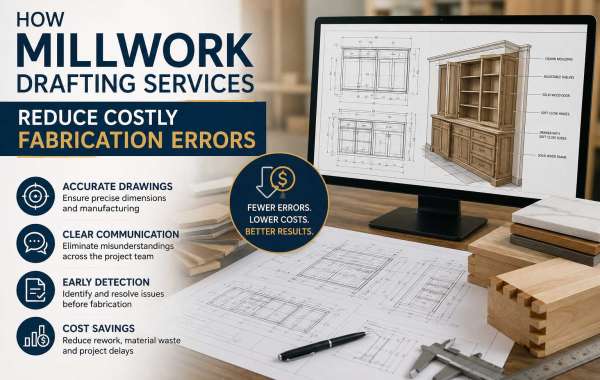

In today's construction and interior fit-out industry, even minor fabrication errors can lead to significant financial losses, project delays, and dissatisfied clients. Custom cabinetry, wall paneling, reception desks, retail fixtures, and other architectural millwork components require exceptional precision. That's where professional drafting becomes invaluable.
Investing in millwork drafting services ensures every detail is accurately documented before production begins. Detailed shop drawings eliminate guesswork, improve communication between project stakeholders, and significantly reduce costly fabrication mistakes.
According to industry reports, construction rework can account for up to 5–15% of total project costs , with design inaccuracies and communication gaps being among the leading causes. Accurate drafting helps minimize these avoidable expenses by providing fabrication-ready documentation before manufacturing starts.
Why Fabrication Errors Are So Expensive
Fabrication mistakes affect far more than just the piece that needs replacing. A single dimensional error can create a chain reaction throughout the project.
Common consequences include:
- Material waste
- Production downtime
- Installation delays
- Additional labor costs
- Missed project deadlines
- Client dissatisfaction
- Increased transportation expenses for replacement components
For commercial projects involving hundreds of custom millwork pieces, even a small drafting oversight can translate into thousands of dollars in unexpected costs.
How Millwork Drafting Prevents Costly Mistakes
1. Accurate Dimensions Before Production
Millwork drafting converts design concepts into highly detailed technical drawings with exact measurements, tolerances, and specifications.
Every cabinet, shelving unit, panel, molding, or fixture is documented before manufacturing begins, reducing the likelihood of incorrect cuts or misaligned installations.
This level of precision allows fabrication teams to build components with confidence rather than relying on assumptions.
2. Eliminates Miscommunication
Construction projects involve architects, interior designers, engineers, fabricators, installers, and project managers.
Without standardized drawings, each stakeholder may interpret the design differently.
Detailed shop drawings provide one reliable source of information that everyone follows, reducing confusion throughout the project lifecycle. Clear documentation improves collaboration and minimizes costly misunderstandings.
3. Detects Design Conflicts Early
One of the greatest advantages of professional drafting is identifying potential problems before production starts.
These may include:
- Cabinet door clearance issues
- Structural conflicts
- Plumbing interference
- Electrical outlet placement
- HVAC obstructions
- Hardware incompatibility
Resolving these issues digitally is dramatically less expensive than correcting them after fabrication.
Statistics That Show the Value of Accurate Drafting
Professional drafting isn't simply about creating drawings—it directly impacts project profitability.
Some notable industry findings include:
Reduced Material Waste
Accurate drafting minimizes unnecessary material purchases by optimizing cutting layouts and reducing fabrication errors. Detailed documentation also supports more accurate material takeoffs.
Lower Rework Costs
Industry studies estimate that project rework commonly represents 5–15% of overall construction costs , with many issues stemming from inaccurate or incomplete design documentation. Improving drawing accuracy significantly reduces these avoidable costs.
Faster Project Completion
Fabrication-ready drawings reduce shop-floor interpretation, allowing manufacturers to move more quickly from design approval to production and installation.
Key Elements Included in Professional Millwork Drafting
A comprehensive drafting package typically contains:
Detailed Shop Drawings
These include:
- Floor plans
- Elevations
- Sections
- Isometric views
- Assembly details
Joinery Details
Professional drawings specify:
- Fasteners
- Joint types
- Edge treatments
- Hardware locations
- Connection methods
This ensures every component is manufactured exactly as intended.
Material Specifications
Detailed documentation identifies:
- Wood species
- Veneers
- Laminates
- Panel thickness
- Finishes
- Edge banding
- Hardware schedules
Clear specifications eliminate uncertainty during fabrication.
How Drafting Improves Quality Control
Quality assurance begins long before manufacturing starts.
Professional drafting enables:
Standardized Production
Each component follows identical specifications, reducing inconsistencies across multiple units.
Easier Review Process
Clients, architects, and contractors can review drawings before production begins, allowing revisions to be made without wasting materials.
Better Installation Accuracy
Installers receive precise documentation showing exactly where each component belongs, reducing onsite modifications.
Industries That Benefit Most
Professional millwork drafting provides value across numerous industries, including:
- Commercial offices
- Hospitality
- Retail stores
- Luxury residential homes
- Healthcare facilities
- Educational institutions
- Restaurants
- Corporate interiors
Projects with complex custom millwork benefit the most from fabrication-ready documentation.
Financial Benefits Beyond Error Reduction
Reducing fabrication mistakes is only one advantage.
Professional drafting also helps organizations:
Improve Budget Accuracy
Detailed drawings create more reliable material estimates and labor planning.
Speed Up Approvals
Well-prepared documentation simplifies client reviews and approval workflows.
Increase Manufacturing Efficiency
Fabricators spend less time interpreting designs and more time producing quality products.
Enhance Customer Satisfaction
Projects delivered on time and with fewer defects lead to happier clients and stronger business relationships.
Choosing the Right Millwork Drafting Partner
When selecting a drafting provider, look for:
- Experience with architectural millwork
- Expertise in CAD and BIM workflows
- Knowledge of fabrication standards
- Strong quality assurance processes
- Fast turnaround times
- Clear communication
- Ability to create fabrication-ready shop drawings
A knowledgeable drafting team understands both design intent and manufacturing requirements, helping prevent costly mistakes before production begins.
Conclusion
Fabrication errors are among the most expensive problems in construction and custom millwork projects. Fortunately, many of these issues are entirely preventable with accurate drafting.
Professional millwork drafting transforms architectural concepts into precise fabrication documents that improve communication, eliminate ambiguity, reduce material waste, and streamline manufacturing.
As projects become increasingly complex, investing in expert drafting services is no longer just an operational advantage—it is a strategic decision that protects budgets, shortens project timelines, and consistently delivers higher-quality results.