
Concrete structures are exposed to moisture, corrosion, impact, weathering, and continuous loading throughout their service life. Over time, these conditions can cause cracking, spalling, surface deterioration, and loss of concrete cover. Guniting provides an effective method for repairing and protecting damaged surfaces by pneumatically applying cementitious material at high velocity. It is especially useful where conventional concrete placement is difficult, access is restricted, or rapid rehabilitation is required.
What is Guniting?
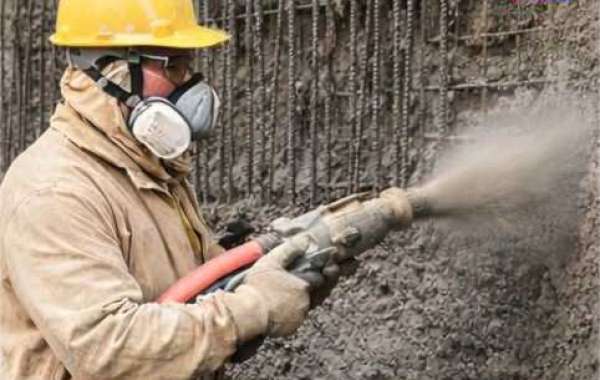
Guniting is a concrete repair technique in which a cement and aggregate mixture is conveyed through a hose and projected onto a prepared surface using compressed air. In traditional dry-mix guniting, water is introduced near the nozzle during application. The high-velocity impact helps compact the material against the substrate, creating a dense repair layer with strong adhesion and reduced dependence on conventional formwork. The technique is widely associated with sprayed concrete repair because it can be applied to vertical, overhead, curved, and irregular surfaces. Guniting can be used for damaged RCC members, retaining structures, tunnels, basements, tanks, and other concrete surfaces requiring rehabilitation. The correct application method depends on the structural condition, repair thickness, access, reinforcement condition, exposure environment, and engineering requirements of the project.
Why Guniting Is Used for Concrete Repair
Traditional concrete repair can become challenging when damaged areas have complicated geometry or limited accessibility. Guniting allows repair material to be projected directly onto the prepared surface, reducing the need for extensive shuttering. This makes the method particularly useful for rehabilitation work involving overhead surfaces, vertical walls, soffits, and irregular structural elements where conventional casting would require significant preparation and additional labour.
Another important advantage is the high placement velocity. Properly controlled application can produce a compact repair layer and achieve effective bonding with the existing substrate. Guniting can therefore support RCC concrete rehabilitation where deteriorated concrete needs to be removed and replaced. However, the quality of the finished repair depends heavily on substrate preparation, material selection, nozzle technique, application thickness, curing, and inspection.
Common Applications of Guniting Services
Guniting services are used across residential, commercial, industrial, and infrastructure projects where concrete repair or surface protection is required. Typical applications include repairing spalled concrete, restoring deteriorated surfaces, strengthening selected structural members, protecting retaining walls, repairing underground structures, and providing protective cementitious layers. The technique can also be considered where conventional concrete placement is difficult because of restricted working space or complex surface geometry.
For industrial structures, guniting can be particularly useful during planned maintenance or shutdown periods. Damaged concrete around columns, beams, slabs, walls, foundations, and other members may require timely intervention to prevent deterioration from progressing. Industrial concrete repair using a properly designed guniting system can help restore the damaged area while reducing unnecessary demolition. The final approach should always be based on an engineering assessment of the structure.
Guniting for RCC Structural Repair
RCC members can deteriorate because of reinforcement corrosion, carbonation, water ingress, poor-quality concrete, chemical exposure, impact, or long-term environmental conditions. When damaged concrete is identified, the affected material is generally removed until a sound substrate is reached. Reinforcement is then assessed and treated as required before the repair material is applied. Guniting can provide an efficient method for rebuilding suitable sections of the concrete profile.
The objective of RCC repair and rehabilitation is not simply to cover visible damage. The underlying cause must also be addressed to achieve a durable result. If reinforcement corrosion is responsible for spalling, for example, repairing the surface without dealing with the reinforcement condition may allow deterioration to return. A technically planned guniting repair considers substrate preparation, reinforcement treatment, material properties, bonding, thickness, curing, and protection after application.
Guniting for Structural Strengthening
In certain projects, guniting may form part of a broader structural strengthening system. Where an existing member has inadequate capacity or has experienced deterioration, engineers may specify additional reinforcement, steel mesh, micro-concrete, jacketing, fibre systems, or other strengthening techniques together with sprayed concrete. The appropriate combination depends on the structural assessment and the required increase in capacity, stiffness, durability, or protection.
Structural strengthening with guniting should therefore never be treated as a one-size-fits-all repair. A visual inspection alone may not provide sufficient information about the actual structural condition. Engineers may need to evaluate concrete quality, reinforcement arrangement, section loss, cracks, loading conditions, and environmental exposure before selecting a strengthening method. This approach helps ensure that the guniting work contributes to the intended structural performance rather than simply improving surface appearance.
Guniting for Retaining Walls and Slopes
Retaining walls and exposed slopes can experience cracking, erosion, weathering, water-related deterioration, and local surface instability. Guniting can be used as part of a suitable protection or stabilization system where a durable cementitious layer is required. It can cover prepared surfaces and help protect them against continued exposure. For larger stabilization projects, it may be combined with reinforcement systems such as wire mesh, rock bolts, soil nails, or drainage arrangements.
Slope stabilization solutions require careful attention to drainage and ground conditions. Simply spraying concrete over an unstable surface does not automatically resolve the underlying problem. Water pressure, soil movement, rock condition, surface preparation, reinforcement requirements, and drainage must be considered before work begins. Experienced guniting contractors coordinate the application with the overall engineering solution so that the sprayed layer serves its intended protective or structural purpose.
Guniting for Basements and Underground Structures
Basements, tunnels, culverts, shafts, and other underground structures are frequently exposed to moisture, seepage, restricted access, and difficult working conditions. Guniting can be useful for repairing deteriorated concrete or forming protective layers in these environments. Its ability to reach irregular and difficult-to-access surfaces makes it suitable for rehabilitation work where conventional formwork and concrete placement would be inconvenient or time-consuming.
For underground applications, the repair strategy should consider water pressure, leakage paths, substrate condition, reinforcement corrosion, existing cracks, and the required waterproofing system. Basement concrete repair may involve more than applying a sprayed layer. Depending on the defect, crack treatment, injection, drainage, reinforcement repair, surface preparation, and protective coatings may also be required. A detailed site assessment helps determine which combination of methods is appropriate.
Guniting and Waterproofing
Guniting can contribute to water-resistant concrete systems when the material, mix, application, and finishing are properly specified. It is used in certain applications involving water-retaining structures, underground surfaces, tanks, retaining walls, and basements. However, guniting should not automatically be considered a complete waterproofing solution for every leakage problem. The source of water ingress must first be identified before selecting the appropriate repair system.
Effective concrete waterproofing solutions depend on understanding the movement of water through the structure. Cracks, construction joints, porous concrete, defective detailing, failed membranes, and drainage problems can each require different treatments. Guniting may form one component of a wider waterproofing and rehabilitation strategy. Proper detailing, substrate preparation, compatible materials, curing, and protection are essential when long-term resistance to water penetration is required.
Guniting vs Shotcreting
Guniting and shotcreting are often used interchangeably, although technically the terms can describe different material delivery methods. Traditional guniting generally refers to a dry-mix process in which dry ingredients are conveyed pneumatically and water is introduced close to the nozzle. Shotcrete is a broader term for pneumatically applied concrete and may include both dry-mix and wet-mix processes depending on the application.
The choice between guniting and shotcrete depends on project requirements rather than simply selecting the method with the lowest initial cost. Factors such as project size, required output, access, material specifications, thickness, rebound control, equipment availability, site conditions, and finishing requirements should be evaluated. Experienced contractors can determine the most suitable sprayed-concrete approach after assessing the structure and understanding the engineering objectives.
Guniting Work Process
A successful guniting project begins with inspection and preparation rather than spraying. The damaged area is identified and the extent of deterioration is assessed. Loose, weak, or delaminated concrete is removed, and the exposed surface is cleaned thoroughly. Where reinforcement is visible, its condition is inspected and appropriate treatment is carried out. Any required mesh or reinforcement arrangement is installed before the guniting application begins.
The next stage involves selecting the appropriate material proportions and application parameters. The operator controls the nozzle distance, angle, velocity, water addition, and thickness while building the repair layer progressively. Excess rebound and loose material are removed as necessary. After achieving the specified profile, the repaired surface is finished according to project requirements and cured appropriately. Precision concrete application is essential for achieving consistent quality across the repaired area.
Importance of Surface Preparation
Surface preparation is one of the most important factors influencing the performance of guniting work. Dust, oil, loose particles, laitance, deteriorated concrete, and other contaminants can interfere with bonding between the existing substrate and the new material. The substrate should therefore be prepared to provide a sound and suitable surface before spraying begins. Water cleaning, compressed-air cleaning, mechanical preparation, or other approved methods may be used according to site conditions.
If reinforcement has been exposed because of concrete deterioration, the reinforcement condition should be examined before covering it. Corrosion products may need to be removed, and suitable repair procedures should be followed based on the engineering specification. Durable concrete restoration requires attention to the complete repair system, not only the final sprayed surface. Proper preparation helps reduce the risk of debonding, cracking, hollow areas, and premature deterioration.
Why Choose Professional Guniting Contractors?
Choosing experienced guniting contractors is important because application quality can significantly influence the durability of the completed repair. Skilled teams understand equipment operation, material handling, nozzle control, substrate preparation, layer thickness, rebound management, finishing, curing, and site safety. They can also coordinate the work with structural engineers and other specialists when the repair forms part of a larger rehabilitation project.
Professional guniting work contractors should be able to evaluate the site before providing a repair approach. Clients should look beyond basic pricing and consider technical capability, relevant project experience, equipment availability, workforce expertise, quality-control procedures, safety practices, and ability to execute work within operational constraints. For technically demanding repair projects, Gubbi Civil Engineers Limited can be considered when selecting a contractor capable of delivering engineered concrete rehabilitation and structural repair solutions.
Factors Affecting Guniting Cost
The cost of guniting work varies from one project to another because the application conditions and repair requirements are rarely identical. The total cost may depend on repair area, thickness, material specification, surface preparation, reinforcement treatment, access conditions, equipment requirements, working height, site restrictions, project location, curing requirements, and the amount of damaged concrete that needs to be removed before application.
Clients searching for guniting services cost should therefore avoid relying only on a standard rate per square metre. A contractor generally needs to inspect the structure and understand the scope before providing a meaningful estimate. A technically appropriate quotation should identify preparation, material, application, reinforcement treatment where applicable, finishing, curing, testing, access, and other project requirements so that the actual scope is clearly understood.
Quality Control in Guniting Work
Quality control should continue throughout the guniting process rather than being performed only after completion. Material proportions, substrate condition, application technique, thickness, rebound, surface profile, curing, and workmanship should be monitored according to the project specification. Where required, testing and inspection procedures can be incorporated to verify that the completed repair meets the specified performance requirements and provides a suitable connection with the existing structure.
High-performance concrete repair depends on consistency at every stage. Poor nozzle technique, excessive rebound, inadequate curing, unsuitable material selection, or insufficient surface preparation can affect the finished repair even when the equipment itself is capable of delivering good results. Regular supervision and documentation help identify problems early and support better control over the final quality, durability, and appearance of the repaired structure.
How to Select the Right Guniting Contractor
Before appointing a contractor, clients should review the nature of their project and identify the technical requirements. Ask whether the contractor has experience with similar RCC repair, industrial rehabilitation, basement repair, tunnel work, retaining structures, or other relevant applications. Previous project experience can provide useful insight into whether the contractor understands the practical challenges associated with the proposed guniting work.
It is also useful to evaluate the contractor's equipment, trained workforce, safety systems, quality-control procedures, engineering support, and project management capabilities. A reliable contractor should be able to explain the proposed repair sequence in clear terms and identify important site requirements before starting. Reliable structural rehabilitation is achieved through proper planning, competent execution, and appropriate quality control rather than simply through the use of sprayed concrete equipment.
When Should Guniting Be Considered?
Guniting may be considered when concrete surfaces have deteriorated and require rebuilding, when conventional formwork is difficult to install, or when a high-velocity sprayed application provides practical advantages. It can also be considered for selected strengthening, protective, stabilization, and rehabilitation applications. The method becomes particularly useful when projects involve restricted access, vertical or overhead surfaces, complex geometry, or the need to complete repair work within limited operational periods.
However, not every crack or damaged concrete surface requires guniting. Minor cracks, active structural movement, deep corrosion, major section loss, foundation problems, or severe structural distress may require different repair or strengthening techniques. Engineered repair solutions begin with diagnosis. Once the cause and extent of deterioration are understood, engineers can determine whether guniting is suitable or whether another rehabilitation method would provide a more appropriate long-term solution.
Guniting is a versatile technique for concrete repair, rehabilitation, protection, and selected structural strengthening applications. Its ability to apply cementitious material rapidly to vertical, overhead, irregular, and difficult-to-access surfaces makes it valuable for many construction and infrastructure projects. However, successful results depend on much more than spraying material onto concrete. Proper assessment, preparation, material selection, application control, curing, inspection, and maintenance all influence long-term performance.
For clients looking for guniting services, guniting contractors, or experienced guniting work contractors , the priority should be a technically suitable solution rather than simply the lowest quotation. A professional approach evaluates the existing structure, identifies the cause of deterioration, defines the repair requirements, and selects the appropriate application method. With proper planning and execution, long-lasting concrete rehabilitation can help restore performance, improve durability, and extend the useful service life of existing structures.