
Introduction
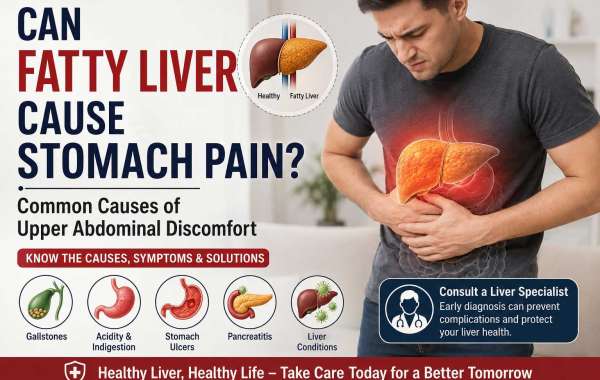
Can fatty liver cause stomach pain? Yes, it can—but not everyone with fatty liver experiences pain. Fatty liver, now commonly called metabolic dysfunction-associated steatotic liver disease (MASLD), often causes no noticeable symptoms. However, some people may experience mild discomfort or a dull ache in the upper-right part of the abdomen, where the liver is located.
The tricky part is that stomach or upper abdominal pain has many possible causes. Gallstones, acidity, indigestion, ulcers, pancreatitis, muscle strain, and other liver conditions can all cause discomfort in a similar area.
So, if you have fatty liver and abdominal pain, should you automatically blame your liver? Not necessarily. Understanding the possible causes can help you know when simple lifestyle changes may be enough and when medical evaluation is important.
Table of Contents
| Sr# | Headings |
|---|---|
| 1 | Can Fatty Liver Cause Stomach Pain? |
| 2 | Where Does Fatty Liver Pain Usually Occur? |
| 3 | Why Can Fatty Liver Cause Upper Abdominal Discomfort? |
| 4 | What Does Fatty Liver Pain Feel Like? |
| 5 | Common Causes of Upper Abdominal Pain |
| 6 | How Is Fatty Liver Diagnosed? |
| 7 | When Is Abdominal Pain a Warning Sign? |
| 8 | Fatty Liver and Advanced Liver Disease |
| 9 | How Is Fatty Liver-Related Discomfort Treated? |
| 10 | Diet and Lifestyle Changes for Fatty Liver |
| 11 | When Should You See a Liver Specialist? |
| 12 | Can Fatty Liver Lead to Liver Transplantation? |
| 13 | How to Protect Your Liver Long-Term |
| 14 | Conclusion |
| 15 | Frequently Asked Questions |
1. Can Fatty Liver Cause Stomach Pain?
Fatty liver can sometimes cause abdominal discomfort, but pain is not its most common symptom.
Many people with fatty liver have no symptoms at all. The condition is frequently discovered incidentally during a blood test, ultrasound, or other medical examination.
When discomfort does occur, it is commonly described around the upper-right side of the abdomen, underneath the ribs. Some people describe it as:
A dull ache
Mild pressure
A feeling of fullness
Occasional tenderness
Discomfort after eating
A nagging sensation beneath the right ribs
One reason may be enlargement of the liver. When the liver becomes enlarged, the surrounding capsule can stretch and produce discomfort.
Think of the liver like a large sponge inside a protective covering. If the sponge becomes swollen, the covering can become stretched, which may create a feeling of pressure or discomfort.
However, severe or sudden abdominal pain should not simply be attributed to fatty liver.
2. Where Does Fatty Liver Pain Usually Occur?
The liver sits primarily in the upper-right portion of the abdomen, beneath the lower ribs.
Therefore, discomfort related to the liver is often felt:
Under the right rib cage
In the upper-right abdomen
Sometimes toward the upper-middle abdomen
Occasionally toward the right shoulder or back, depending on the underlying condition
The location alone cannot confirm that fatty liver is causing the pain.
For example, the gallbladder is also located on the right side of the upper abdomen. Gallstones can cause significant pain in this region and may sometimes be mistaken for liver pain.
This is why persistent or unexplained discomfort deserves proper evaluation rather than self-diagnosis.
3. Why Can Fatty Liver Cause Upper Abdominal Discomfort?
Fat accumulation itself does not always produce pain. In many people, fatty liver remains completely silent.
However, discomfort may occur when the liver becomes enlarged or inflammation develops.
There is an important distinction between simple fat accumulation and more progressive liver disease.
Simple Fatty Liver
In simple steatosis, fat accumulates in liver cells without significant inflammation or liver injury. Many people have no symptoms.
MASH
Some people develop metabolic dysfunction-associated steatohepatitis (MASH), where fat accumulation is accompanied by inflammation and liver injury. This condition can progress to fibrosis and, in some people, cirrhosis.
AASLD notes that most people with MASLD are asymptomatic, which is one reason liver disease can remain unnoticed for years.
Therefore, the absence of pain does not necessarily mean that the liver is completely healthy.
4. What Does Fatty Liver Pain Feel Like?
There is no single type of pain that proves fatty liver is responsible.
When fatty liver is associated with discomfort, it is often mild and persistent rather than sharp and severe.
You may notice:
Dull discomfort: A nagging sensation under the right ribs.
Pressure or fullness: A feeling that something is heavy in the upper abdomen.
Tenderness: The area may feel uncomfortable when touched.
Occasional aching: The discomfort may come and go.
However, symptoms vary considerably between individuals.
Severe, stabbing, rapidly worsening, or unbearable pain requires medical assessment because another condition may be responsible.
5. Common Causes of Upper Abdominal Pain
If you have fatty liver and stomach pain, your liver may not necessarily be the culprit.
Gallstones
Gallstones can cause pain in the upper-right abdomen, particularly after meals. Pain may be intense and can sometimes radiate to the back or right shoulder.
Acid Reflux and Indigestion
Heartburn, acid reflux, bloating, and indigestion commonly cause upper abdominal or chest discomfort.
Peptic Ulcers
Stomach or duodenal ulcers can produce burning or aching pain in the upper abdomen.
Gastritis
Inflammation of the stomach lining may cause abdominal discomfort, nausea, bloating, or a burning sensation.
Pancreatitis
Inflammation of the pancreas can cause significant upper abdominal pain, sometimes radiating toward the back. Severe or persistent pain should be evaluated urgently.
Muscle Strain
An abdominal muscle injury, strenuous exercise, coughing, or lifting can cause localized pain that may be mistaken for internal abdominal discomfort.
Other Liver Conditions
Hepatitis and other liver diseases can cause upper abdominal pain, particularly under the right ribs. Hepatitis may also cause symptoms such as jaundice, dark urine, nausea, fatigue, and loss of appetite.
The important lesson is simple: abdominal pain should be assessed according to the complete clinical picture, not just an ultrasound finding of fatty liver.
6. How Is Fatty Liver Diagnosed?
If you have abdominal discomfort and suspect fatty liver, your doctor may recommend several tests.
Medical History and Examination
Your doctor may ask about:
The location and duration of pain
Your diet and physical activity
Alcohol intake
Weight changes
Diabetes
Cholesterol
Blood pressure
Medications
Previous liver problems
Family history
Blood Tests
Liver blood tests may include enzymes such as ALT and AST, along with bilirubin and other markers.
Importantly, normal liver enzymes do not completely rule out MASLD or significant liver disease.
Ultrasound
An abdominal ultrasound can identify fat accumulation and may also help assess the liver and gallbladder.
FibroScan or Elastography
These tests can help assess liver stiffness and estimate whether significant fibrosis may be present.
CT or MRI
Depending on the situation, more detailed imaging may be recommended.
The goal is not simply to answer, "Do I have fatty liver?" The bigger question is:
Has fatty liver caused liver injury or fibrosis, and could something else be causing the abdominal pain?
7. When Is Abdominal Pain a Warning Sign?
Not every episode of stomach discomfort is an emergency. But certain symptoms should not be ignored.
Seek prompt medical attention if abdominal pain is:
Severe or sudden
Persistent or progressively worsening
Associated with repeated vomiting
Associated with fever
Associated with yellow skin or eyes
Accompanied by significant abdominal swelling
Associated with confusion or unusual drowsiness
Accompanied by unexplained weight loss
Associated with vomiting blood or black stools
Accompanied by fainting or severe weakness
Advanced liver disease can produce complications such as jaundice, fluid accumulation, bleeding, and other serious problems.
Do not assume that every new symptom is simply "fatty liver pain."
8. Fatty Liver and Advanced Liver Disease
Fatty liver does not automatically mean cirrhosis.
In fact, many people have early-stage fatty liver without serious liver damage. However, a proportion of patients can develop progressive inflammation and fibrosis over time.
The progression can broadly be understood as:
Fat accumulation → inflammation/liver injury → fibrosis → cirrhosis
Cirrhosis means significant scarring has developed in the liver. At that stage, symptoms may include:
Abdominal swelling from fluid
Swollen legs
Jaundice
Easy bruising or bleeding
Confusion
Severe fatigue
Loss of appetite
Muscle loss
NHS guidance notes that only a smaller proportion of people with fatty liver progress to advanced stages, but fibrosis and cirrhosis can cause serious complications.
That is why identifying liver disease early is so valuable.
9. How Is Fatty Liver-Related Discomfort Treated?
There is no single painkiller or procedure that treats every case of fatty liver.
The most important treatment is addressing the underlying metabolic and lifestyle factors.
Your doctor may recommend:
Weight Management
If you are overweight, gradual and sustainable weight loss can improve metabolic health and reduce liver fat. Even modest weight reduction can provide meaningful health benefits.
Regular Physical Activity
Exercise can improve insulin sensitivity, metabolic health, and liver health.
A commonly recommended target is at least 150 minutes of moderate physical activity per week, depending on your individual health and fitness level.
Managing Diabetes and Cholesterol
High blood sugar, abnormal cholesterol, high blood pressure, and excess body weight frequently occur alongside MASLD.
Managing these conditions is an important part of protecting the liver.
Limiting Alcohol
If you have liver disease, discuss alcohol use with your healthcare professional because alcohol can contribute to liver injury.
Treating the Actual Cause of Pain
If your pain is caused by gallstones, gastritis, reflux, an ulcer, or another condition, that condition needs to be treated separately.
10. Diet and Lifestyle Changes for Fatty Liver
A liver-friendly lifestyle does not have to mean eating bland food forever.
Instead, focus on sustainable habits.
Choose more:
Vegetables
Fruits in appropriate portions
Whole grains
Beans and pulses
Lean protein
Fish
Nuts and seeds in sensible portions
High-fibre foods
Limit:
Sugary beverages
Excess sweets
Highly processed foods
Excess refined carbohydrates
Large portions of fried foods
Excess alcohol
Regular physical activity is equally important.
The goal isn't a crash diet. It is to create habits you can maintain for years.
11. When Should You See a Liver Specialist?
You should consider seeing a liver specialist if you have:
Persistent abnormal liver tests
Fatty liver with significant metabolic risk factors
Evidence of liver fibrosis
Enlarged liver
Persistent upper-right abdominal discomfort
Jaundice
Abdominal or leg swelling
A history of hepatitis
Suspected cirrhosis
Imaging abnormalities involving the liver
A liver specialist can determine whether your symptoms are actually related to the liver and assess your risk of progression.
For patients with advanced liver disease, choosing an experienced transplant team can become particularly important. People researching treatment options may search for the best liver transplant surgeon in india, but the right specialist should be selected based on qualifications, experience with the specific condition, hospital support, transplant outcomes, and the patient's individual needs.
12. Can Fatty Liver Lead to Liver Transplantation?
Most people with fatty liver will never need a liver transplant.
However, advanced fatty liver disease can sometimes progress to cirrhosis, liver failure, or liver cancer. In selected patients with severe irreversible liver disease, transplantation may become an option.
The important point is that fatty liver is not synonymous with liver failure.
Early diagnosis gives you an opportunity to address risk factors before severe damage develops.
If advanced liver disease does occur, a multidisciplinary transplant team can evaluate whether transplantation is appropriate.
13. How to Protect Your Liver Long-Term
Think of your liver as your body's chemical processing plant. It works continuously, even when you are sleeping.
You do not need to wait for pain before taking care of it.
Some practical steps include:
1. Maintain a healthy weight.
Excess body fat, particularly around the abdomen, is strongly associated with metabolic health problems and fatty liver.
2. Exercise regularly.
Walking, cycling, swimming, strength training, or other suitable activities can help.
3. Control blood sugar.
If you have diabetes or prediabetes, follow your healthcare professional's treatment plan.
4. Monitor cholesterol and blood pressure.
These conditions commonly occur alongside fatty liver.
5. Avoid unnecessary supplements and medications.
Some substances can affect the liver. Always discuss supplements with your healthcare professional.
6. Limit alcohol.
Alcohol can contribute to liver injury, particularly when combined with other liver problems.
7. Keep medical appointments.
Fatty liver can remain silent even while liver damage progresses. Regular assessment can help identify changes early.
14. Conclusion
Can fatty liver cause stomach pain? Yes, sometimes—but abdominal pain should never automatically be blamed on fatty liver. Mild upper-right abdominal discomfort can occur, particularly when the liver is enlarged, but many people with fatty liver have no symptoms.
If you experience persistent, severe, or unexplained abdominal pain, proper medical evaluation is important. Finding the actual cause can prevent unnecessary worry and help identify conditions that require treatment.
Most importantly, fatty liver is often manageable, especially when identified early. Healthy eating, regular exercise, weight management, and control of diabetes and cholesterol can play a major role in protecting your liver.
For people with advanced liver disease, consultation with an experienced liver specialist or transplant team can help determine the most appropriate treatment pathway.
15. Frequently Asked Questions
1. Can fatty liver cause pain under the right ribs?
Yes. Some people with fatty liver experience mild discomfort or aching under the right ribs, where the liver is located. However, gallstones, gastritis, ulcers, hepatitis, and other conditions can cause similar pain.
2. Is fatty liver pain usually severe?
Usually, fatty liver itself does not cause severe abdominal pain. When discomfort occurs, it is often mild, dull, or described as pressure or fullness. Severe or sudden pain requires medical assessment because another condition may be responsible.
3. Does fatty liver cause stomach bloating?
Fatty liver itself does not necessarily cause ordinary gas-related bloating. However, people with fatty liver may have other metabolic or digestive conditions that cause bloating. Significant abdominal swelling, particularly in someone with advanced liver disease, should be medically assessed because it can sometimes indicate fluid accumulation.
4. Can fatty liver be reversed?
Early fatty liver can often improve substantially with lifestyle changes. Weight management, physical activity, a balanced diet, and control of metabolic conditions can reduce liver fat and help lower the risk of progression. The appropriate approach depends on the individual's health and degree of liver damage.
5. When should I see a liver specialist for fatty liver?
Consider seeing a liver specialist if you have persistent symptoms, abnormal liver tests, significant fibrosis, cirrhosis, unexplained liver abnormalities, or other signs of advanced liver disease. If transplantation becomes a consideration, an experienced transplant team can assess whether it is appropriate for your situation.