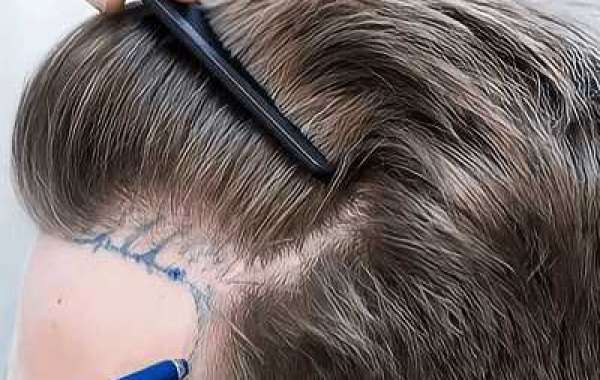

An uneven hairline can make the frontal scalp appear asymmetrical, even when overall hair loss is relatively limited. For selected cases, a FUE hair transplant in Dubai may be considered to improve areas where hairline density or positioning has become noticeably unbalanced. However, creating a natural appearance requires more than simply making both sides look identical. Existing hair direction, facial proportions, natural asymmetry, and future hair changes can all influence the restoration plan.
What Causes an Uneven Hairline?
Hairline unevenness can develop for several reasons.
One side may experience greater recession, hair density may differ between the temples, or the natural hairline may have been asymmetrical from the beginning.
Hair loss progression can make these differences more noticeable.
Natural Hairlines Are Not Perfectly Symmetrical
A completely symmetrical hairline is not necessarily the most natural-looking one.
Small differences between the left and right sides are common.
Trying to create mathematical symmetry may sometimes produce a less natural appearance.
Hair Loss Can Increase Asymmetry
If one side loses follicles faster than the other, the original balance can gradually change.
This may result in a higher temple, deeper recession, or a different frontal contour on one side.
Why the Frontal Hairline Matters
The hairline is one of the most visible parts of the scalp.
Its position influences how the forehead and upper face are perceived.
An uneven contour can therefore become noticeable even when the overall number of missing hairs is relatively small.
Assessing the Shape of the Hairline
Hairline shape includes more than its height.
The curve, temple position, transition zone, density, and relationship with the surrounding hair all contribute to the overall appearance.
Hair Direction Can Differ on Each Side
Hair does not necessarily grow at identical angles across the entire frontal region.
One side may naturally angle differently from the other.
Restoration should account for these patterns rather than forcing every follicle into the same direction.
Why Matching Existing Hair Is Important
Transplanted follicles need to blend with native strands.
Differences in direction, spacing, or density can make the treated area easier to distinguish.
The objective is usually continuity rather than perfect uniformity.
The Role of Follicular Units
Follicular units contain naturally occurring groups of hairs.
Single-hair units can help create softer transitions, while multi-hair units can provide additional fullness farther behind the leading edge.
Their distribution can influence the overall appearance of the hairline.
Correcting One Side May Not Be Enough
An uneven hairline can involve several connected areas.
The frontal center, temples, and transition zones may all influence how balanced the hairline appears.
Looking at one small section in isolation may not provide the complete picture.
Why Facial Proportions Matter
The appropriate hairline position depends partly on the person's facial structure.
A design that looks balanced on one individual may appear too low or too high on another.
This is why restoration should consider the face as a whole.
A Lower Hairline Is Not Automatically Better
Some people assume that moving the hairline forward will always improve appearance.
However, lowering the hairline uses additional donor follicles and may not provide the most natural long-term result.
A balanced position is generally more important than achieving the lowest possible line.
Existing Hair Should Be Preserved Where Possible
If native follicles remain in the uneven area, the restoration plan may need to work around them.
Maintaining the relationship between existing and transplanted hair can help preserve natural characteristics.
Donor Hair Is Limited
FUE relocates available follicles from a donor area.
Because the supply is finite, correcting an uneven hairline should be considered alongside potential future areas of thinning.
Future Hair Loss Can Affect Symmetry Again
Native hair may continue to change after transplantation.
If surrounding follicles become weaker, the hairline could develop a different appearance over time.
Long-term planning is therefore important.
Why Aggressive Correction May Not Be Ideal
Using a large number of grafts to completely redesign the hairline can consume donor resources.
A more conservative adjustment may sometimes create a better balance while preserving options for the future.
Hair Texture Affects Symmetry
Straight, wavy, and curly hair can behave differently along the hairline.
The way individual strands fall can make a small structural difference appear larger or smaller visually.
Hair Thickness Also Matters
Thicker strands can provide greater visual coverage.
Fine hair may expose more scalp between individual follicles.
This means that identical graft numbers do not necessarily create identical visual density on both sides.
Styling Can Hide or Highlight Unevenness
Certain hairstyles can make asymmetry less obvious.
Brushing the hair backward or using short cuts may expose differences more clearly.
Your usual hairstyle should therefore be considered when evaluating the concern.
Photographs Can Be Misleading
Lighting, camera angle, hair position, and facial expression can affect how uneven a hairline appears.
Consistent photographs provide a better basis for comparing changes over time.
Don't Judge Symmetry From One Image
A single photograph may exaggerate one side because of perspective.
Looking at multiple angles can provide a more reliable understanding of the overall hairline shape.
The Goal Is Natural Balance
The purpose of restoration is not necessarily to create two perfectly identical sides.
Instead, the goal can be to reduce noticeable imbalance while maintaining the characteristics that make the hairline look naturally grown.
Recovery Takes Time
Temporary redness, sensitivity, crusting, and other short-term changes may occur after transplantation.
The early appearance does not represent the final hairline.
New Hair Develops Gradually
Transplanted follicles need time to progress through their growth cycle.
Some areas may begin showing visible growth earlier than others.
Uneven early growth does not necessarily mean the mature result will remain uneven.
Why Patience Is Important
Hair restoration is a gradual process.
Evaluating the hairline too soon can lead to unnecessary concern because healing and growth occur at different rates across the scalp.
What Makes an Uneven Hairline Correction Successful?
Several elements can contribute to a natural-looking outcome:
Appropriate hairline positioning.
Natural follicular-unit selection.
Correct growth direction.
Balanced distribution.
Respect for existing hair.
Consideration of future hair loss.
Preservation of donor resources.
Final Thoughts
A FUE hair transplant in Dubai may be an option for selected people who want to improve the appearance of an uneven hairline. However, the objective should not simply be perfect left-to-right symmetry. Natural hairlines contain subtle variations, and factors such as facial proportions, follicular-unit characteristics, hair direction, thickness, existing strands, donor availability, and future hair loss all influence the result. A carefully balanced approach can help address noticeable asymmetry while preserving a natural relationship between the restored and native hair. For those exploring personalized hair restoration options, TAJMEELS CLINIC can be considered when planning the next step.